

























































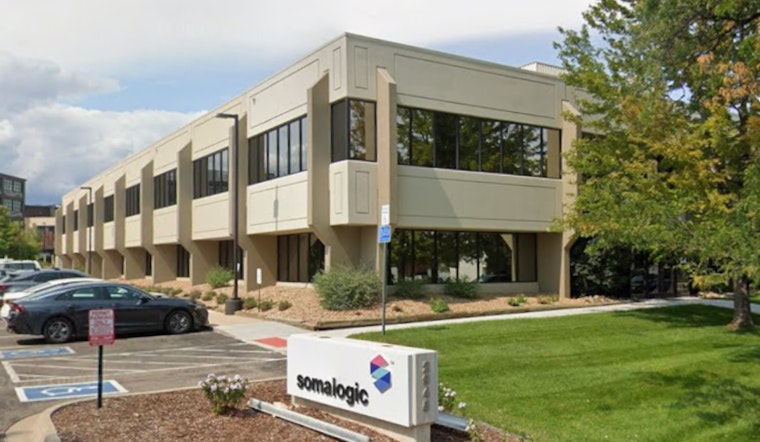
San Diego-based sequencing heavyweight Illumina has officially closed its purchase of Boulder proteomics firm SomaLogic, sealing the deal on Friday with $350 million in cash at closing and the potential for up to $75 million more tied to milestones and royalties. The acquisition pulls SomaLogic’s SomaScan proteomics platform, roughly 250 employees and the company’s CLIA- and CAP-certified Boulder lab into Illumina’s growing multiomics operation.
Illumina first flagged the deal in June 2025 as part of a strategy to bolt protein readouts onto its sequencing ecosystem, according to Illumina. The seller, Standard BioTools, said it has now completed the sale and received $350 million up front, with potential earnouts and royalties that could lift the total value to as much as $425 million, per a company statement from Standard BioTools.
What SomaLogic Brings
SomaLogic’s SomaScan platform relies on proprietary SOMAmer aptamers that can profile thousands of proteins from small blood samples, a wide-angle view that researchers say is useful for uncovering biomarkers and drug targets. “SomaScan enables researchers to better understand the causes of disease and potential targets for new therapies,” Todd Christian said, as reported by the San Diego Union‑Tribune. Company paperwork and peer-reviewed studies show the platform in heavy rotation for large biomarker efforts and translational research, according to SomaLogic filings.
How Illumina Plans To Scale Proteomics
Illumina says it intends to pair SomaLogic’s aptamer reagents with its high-throughput NGS systems, DRAGEN secondary analysis and Illumina Connected Multiomics to push protein measurements into a more scalable and cost-effective range. Executives have also drawn attention to Illumina Protein Prep, a co-developed NGS-based proteomics workflow, and told investors it can quantify up to about 9,500 proteins per sample in roughly two and a half days. The company outlined those integration plans in its deal announcement from Illumina, and the capability surfaced again on Illumina’s Q3 earnings call, according to the Illumina Q3 call.
Local Impact
The transaction brings SomaLogic’s Boulder lab and about 250 staffers into Illumina’s orbit, adding a CLIA- and CAP-certified testing and manufacturing footprint in Colorado to the company’s San Diego base. The closing announcement specifies that the Boulder facility, including lab, office and manufacturing space, is part of the package, according to Standard BioTools.
The Money And The Terms
On paper, the financials are relatively clean: $350 million paid at closing plus up to $75 million in near-term performance-based earnouts, along with defined royalty arrangements tied to certain product revenues, according to coverage of the closing from Investing.com. Sellers hold on to certain intellectual-property carve-outs and royalty streams, a structure industry watchers say keeps upside for Standard BioTools while letting Illumina lock in the margin on kitted consumables.
Why It Matters
Shifting aptamer-based proteomics onto sequencing platforms could sharply cut per-sample costs for large protein studies and let researchers layer protein data on top of genomic cohorts at scale, a capability pharma has been looking for in target discovery and biomarker programs. That strategy tracks with Illumina’s recent data-heavy bets, including the Billion Cell Atlas project that local coverage cast as a swing at drug-discovery datasets and AI-ready biology in Billion Cell Power Play. Analysts say SomaLogic folds in a services and consumables business that can turn accretive as multiomics adoption grows, according to TipRanks.
Illumina and market coverage indicate that the acquired business is expected to reach profitability on a non-GAAP basis by 2027 as kitted NGS panels and assay services ramp. For San Diego and Boulder, the tie-up tightens a cross-regional pipeline that links sequencing infrastructure with protein measurement and downstream drug-discovery work, effectively putting more of the multiomics stack under one corporate roof.





