

























































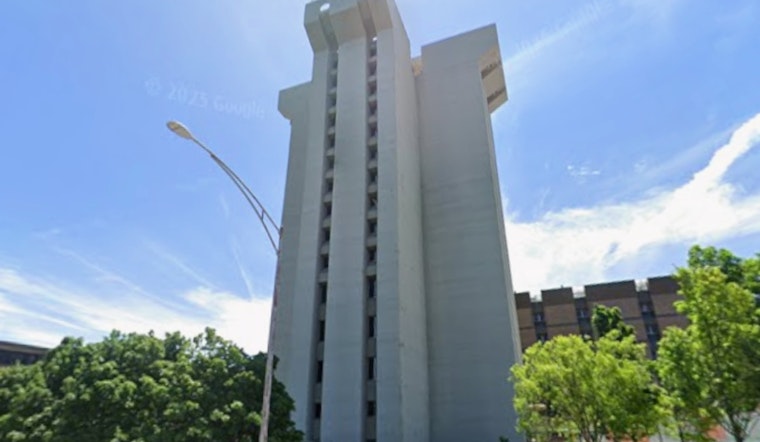
The University of Cincinnati's Crosley Tower has reached the end of its tenure, as demolition work is scheduled to start, an effort that will incrementally dismantle the Brutalist icon over the following 10 months, subject to the whims of weather, a University of Cincinnati announcement detailed the plan to take down the structure that has been part of the uptown campus skyline for decades.
Crosley Tower, which stood out with its stark concrete aesthetics and imposing presence on Martin Luther King Drive, has played host to a range of academic disciplines since its erection 57 years ago, embodying an era's architectural philosophy and serving as a constant, albeit divisive, fixture for faculty and students alike; it acquired its name from alumnus Powel Crosley Jr., whose achievements included the invention of the Crosley radio and who was also an accomplished alumnus of both the University's College of Law and College of Engineering and Applied Science.
Despite its structural issues and criticisms about its lack of functionality, Crosley Tower's design, a product of late architect Charles Burchard, was noteworthy given its single-pour construction technique, where wet concrete was continuously poured around the clock until completion — a process once harnessed by the U.S. Army Corps of Engineers for creating concrete submarine watchtowers during WWII, as described by retired UC Geosciences Professor Emeritus Warren Huff in recollection of the tower's construction that he observed from his office as the building took shape without pause for nearly three weeks.
This intentional deconstruction by Skanska, the hired international firm responsible for the demolition, is meant to respect community and safety, focusing on a thoughtful approach that minimalizes impacts to the surrounding area, "our focus is to carry out this work safely, respectfully and with minimal impact on our neighbors," said Skanska's Chris Hopper in an official statement, affirming a commitment to dismantle the building "in engineered sections" in collaboration with O'Rourke Wrecking Company and THP Limited engineering, necessary due to the building's unique design; Hopper emphasized the complex care which the project demands in an interview with the UC's news release.
The transition has, nonetheless, stirred emotions among alumni, with Anna Hargan, UC Class of '22 and architectural designer, expressing both sadness and a sense of admiration for the building in her master's thesis, "I don’t think there will ever be anything like Crosley Tower," she said in a reflective note, and further added "Goodbye, old friend — thank you for watching over us," her sentiments echoing the loss of a physical embodiment of memory and legacy, a narrative further expanded in UC's release.
As Crosley Tower is slowly erased from the physical world, its role as a hub of scientific discovery is also being highlighted. Past UC doctoral graduate Deirdre Piedmonte reminded peers of the groundbreaking work conducted within Crosley's walls, like the development of Benadryl and advancements in PCR tests, contributions she feels should not fade with the building's physical presence. As the landscape of the University of Cincinnati experiences this transformation, the memory of what once stood will remain in the annals of its history and in the minds of those who engaged with it on a daily basis.



