

























































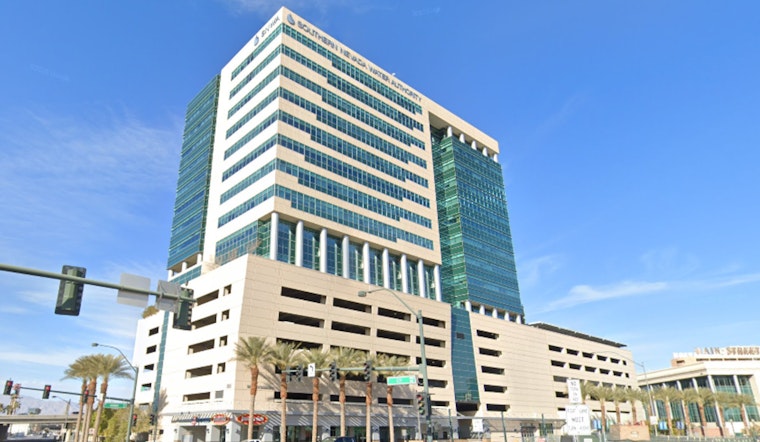
Las Vegas Valley homeowners are hauling the region’s water boss into court, claiming Southern Nevada’s high-profile war on “nonfunctional” grass is taking out something far more valuable than turf: mature shade trees. A lawsuit filed Monday in Clark County District Court accuses the Southern Nevada Water Authority of overstepping its legal bounds and blames the state’s grass ban for widespread collateral damage. The complaint estimates roughly 100,000 mature trees have already died and pegs the total cost of lost canopy and benefits at about $300 million. The homeowners argue it is not the law itself, but how the agency is enforcing it on the ground, that is forcing turf removals which in turn harm older trees and erase neighborhood shade.
As reported by the Las Vegas Review-Journal, the complaint names four local plaintiffs, including Summerlin resident Kim Snyder and Henderson resident Mark Edington. It includes a declaration from a horticulturist that backs up the tree-loss estimate. The suit, led by Summerlin attorney Sam Castor, challenges the water authority’s power to label grass as “nonfunctional” and order its removal while tallying what it says is significant damage to both public and private trees.
What the lawsuit argues
The complaint takes aim at how the Southern Nevada Water Authority has rolled out Assembly Bill 356. Instead of formal regulations, the filing says, key rules have arrived through website guidance and committee definitions, which homeowners say gives them little notice and even less leverage to push back. “SNWA claims its interpretations are binding law but they are not,” the lawsuit states, according to the Las Vegas Review-Journal.
Attached declarations from experts, including Norm Schilling, owner of Mojave Bloom Nursery, contend that when grass is stripped out from under mature tree canopies, fewer than 10 percent of those trees survive. The homeowners say that kind of mortality rate turns turf conversion from a water-saving measure into a shade wipeout on neighborhood streets.
How the turf law works
Assembly Bill 356, passed in 2021, bans the use of Colorado River water to irrigate certain nonfunctional turf at properties that are not zoned exclusively for single-family residences starting Jan. 1, 2027, according to the Nevada Legislature. The Southern Nevada Water Authority, which is responsible for defining and carrying out the law, spells out what counts as nonfunctional turf and offers cash-for-grass rebates plus a $100 tree bonus for qualifying projects. It also runs a waiver process for certain properties.
The statute lets single-family backyards keep their lawns and protects active recreational turf such as parks and athletic fields. Medians, roadside streetscapes and many HOA-managed common areas, however, fall squarely under the 2027 removal deadline, according to the agency’s guidance.
Local backlash and organizing
Some neighborhood groups say the water agency is reading that authority too broadly, especially when it comes to grass under established trees in HOA areas and along neighborhood streets. They argue that such turf is “functional” because it helps keep trees alive and streets cooler, and they warn that aggressive conversion orders bring unintended environmental and financial fallout.
The Water Fairness Coalition has been organizing on behalf of residents, petitioning and lobbying for a more flexible approach to grass under mature trees. Meanwhile, the Las Vegas Valley Water District, a member agency of the regional authority, posts service rules, rebate details and water-waste guidance as it gears up customers for the 2027 cutoff.
What comes next
The case now sits in Clark County District Court, and it is not yet clear when a judge will take up pretrial motions or any requests for emergency relief. The water authority’s public outreach materials highlight phased implementation, waivers and financial incentives, and they urge property owners to work with the agency on alternatives to simple turf removal, according to its website.
Television outlets have already jumped on the story. FOX5 Las Vegas aired a short video report on the lawsuit.
For the homeowners behind the case, the fight is about money, but also about what kind of neighborhoods they will be living in a decade from now. They say losing mature trees means losing shade, higher street temperatures and a hit to neighborhood character. Judges and local officials will now have to balance Southern Nevada’s need to stretch every drop of Colorado River water against those quality-of-life and environmental concerns, all with the 2027 deadline rapidly approaching.



