

























































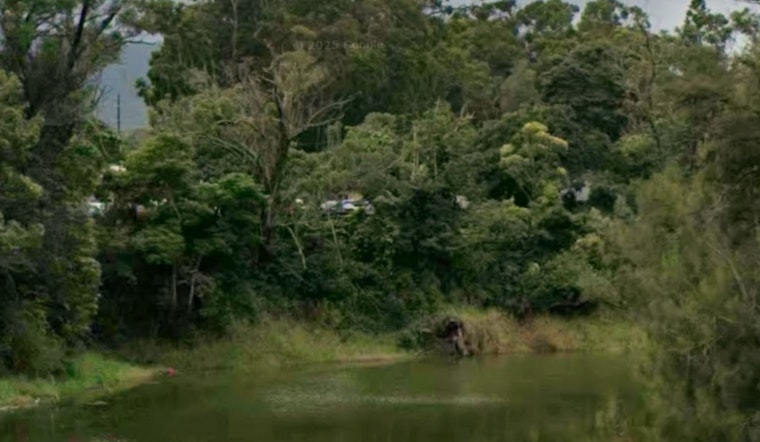
On Oʻahu's North Shore, a century-old sugar-era irrigation system is literally coming apart at the seams, sending precious water across farm roads and into fields while the state scrambles to finalize a long-promised takeover. Recent heavy rains have teamed up with crumbling concrete, and growers and landowners say they are now racing the clock to protect crops, livestock and basic access as ditches fail faster than crews can patch them.
For the past month, a disintegrating plantation-era ditch has been flooding parts of Charles Huang’s 17-acre parcel on Oʻahu’s North Shore. He says water had been quietly seeping through the structure for roughly six months before a larger breach finally opened up. “They say there’s not enough water on the island, and they’re just wasting all this water,” Huang said. As reported by Civil Beat, Dole offered to donate its interest in the irrigation system in 2023, and the state has placed $4.9 million in escrow to buy a 143-acre portion of Lake Wilson’s spillway from Sustainable Hawaiʻi.
State Steps In, But Price Keeps Rising
The state is moving to acquire key pieces of the Wahiawā irrigation network, but the repair tab keeps swelling. The Department of Agriculture and Biosecurity’s FY27 supplemental budget packet asks for $15 million in general-obligation bond funds for Wahiawā Dam improvements, according to the Department of Agriculture and Biosecurity. Local coverage of high lake levels last year documented near-evacuation concerns downstream and reported that lawmakers had already earmarked roughly $25 million toward buying and repairing the dam, per Hawaii News Now.
Century-Old Canals, Modern Hazards
The Wahiawā irrigation network stretches about 30 miles across central Oʻahu and today delivers roughly 6 to 10 million gallons of water a day to about 3,000 acres of active farmland, far below its early 1900s peak. The Department of Agriculture now estimates it will need roughly $31.5 million more to bring the dam and spillway into compliance. The U.S. Army Corps has classified Wahiawā Dam as a “high hazard” structure that could threaten roughly 2,500 people downstream if it failed.
Agribusiness Development Corporation Executive Director Wendy Gady said the corporation plans to manage the network once acquisitions and upgrades are complete, and that a deal for the remaining pieces could be signed within a few months, as reported by Civil Beat.
Farmers Say Repairs Can't Wait
Growers who depend on the ditches say the limbo over ownership and repairs is already hurting operations. Some are trucking water in, others are delaying plantings because they cannot be sure irrigation will be available when they need it. Advocates warn that if the state does not move quickly, the bill for fixes, along with the disruption to local food production, will only grow.
Legal And Safety Stakes
If the state takes ownership of the dam and spillway, it will also take on responsibility for upgrades and regulatory compliance, obligations that helped push Dole to offer the system to the state in the first place. The “high hazard” classification triggers stricter engineering standards, inspections and potential environmental reviews, and state officials say those requirements are a major reason repair cost estimates have risen in recent assessments.
What Comes Next
The Agribusiness Development Corporation says it will coordinate with the Department of Agriculture and landowners to map out priority repairs once the dam and spillway are deemed safety-compliant. Until then, farmers and North Shore landowners are watching the ditches, and the state’s purchase timeline, very closely while crews try to keep the water flowing where it is supposed to go.





