

























































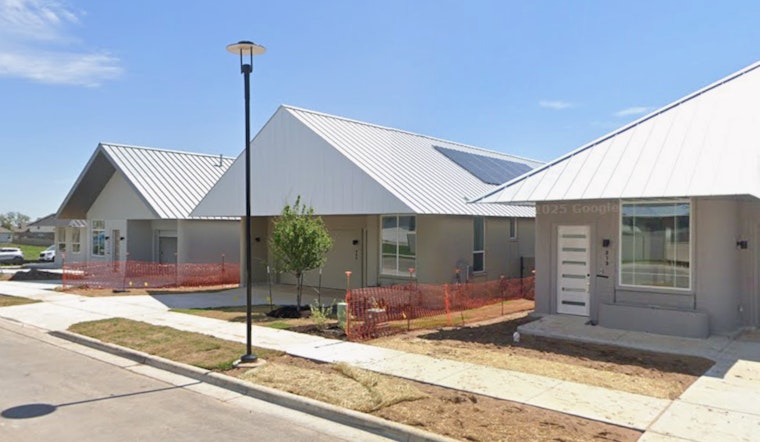
Austin-based ICON is trying to turn 3D-printed housing from a cool demo into an everyday way to build homes, and now it wants to sell the very machines that made its neighborhoods possible. The company’s curved concrete houses are already popping up in a 100-home development north of Austin, at a Lake Travis resort, and in a planned 3D-printed hotel in Marfa. Builders, buyers, and even NASA are watching closely to see whether robot-built walls really change how homes get made.
As reported by KEYE/CBS Austin, ICON’s footprint stretches from the Wolf Ranch neighborhood in Georgetown to projects in Marfa and Austin’s Mueller area. The station reports that Wolf Ranch includes 100 printed homes, 98 of which have already been sold, and notes that ICON has printed more than 220 structures worldwide. KEYE highlights ICON’s new multi-story Titan printer and its low-carbon CarbonX concrete mix as key to the company’s plan to move past one-off showcase houses and into repeatable production.
How The Printers And Materials Work
ICON’s Titan system is described as a next-generation, multi-story construction platform that packages the printer, a material pump, and the company’s BuildOS software, and then pairs those tools with on-demand delivery of its CarbonX mix, according to ICON. Earlier Vulcan printers, the company says, can lay down the walls for a 2,000-square-foot home in roughly seven days, figures reflected in technical summaries and industry writeups. ICON describes CarbonX as a low-carbon, highly printable concrete formula that can be textured and tinted to create different exterior and interior finishes.
From Prototype To Community
Lennar and ICON’s first real stress test came at Wolf Ranch in Georgetown, where the partners printed 100 homes as part of a Genesis Collection and ramped up from a small group of printers to a fleet running around the clock, per Lennar. The builder says roughly four out of five units sold quickly during the rollout, and local coverage has pointed to strong early demand. For developers, Wolf Ranch served as proof that printed wall systems at subdivision scale can plug into a fairly standard sales and finishing pipeline.
Austin Rollouts And Affordable Housing
Closer to downtown, ICON is printing a dozen homes in Mueller, including three income-qualified units priced at the lower end of the local market, according to local reporting. ICON has also announced the construction of 100 printed homes at Community First! Village in northeast Austin, a partnership the company says will deliver supportive housing for people leaving chronic homelessness, per ICON’s newsroom release. Taken together, those projects show the same technology being tested for both affordability experiments and resort-style developments.
What Builders Should Watch
ICON is shifting from being mainly a subcontractor to acting as a supplier, offering Titan as a full system that includes equipment, materials, software, and training, a move reported by KEYE/CBS Austin. KEYE also relays ICON’s claims that CarbonX can be tinted and textured in different ways and that the mix has been engineered to withstand high winds and extended fire exposure, features ICON says could make it appealing in regions vulnerable to fires and storms. If insurers, code officials, and trades sign off on those tests, builders who buy Titan could replicate printed wall systems at much larger scales.
Looking Up And Outward
ICON’s ambitions are not limited to Earth. The company secured a NASA SBIR Phase III award to develop Project Olympus, a construction system designed to work with lunar regolith to build pads, roads, and habitats, as reported by GovCon Wire. That mix of commercial subdivisions, affordable housing pilots, and space-focused contracts helps explain why builders, local planners, and federal agencies are all watching, even as regulators, insurers, and supply chains try to catch up to a very different way of stacking up walls.





