

























































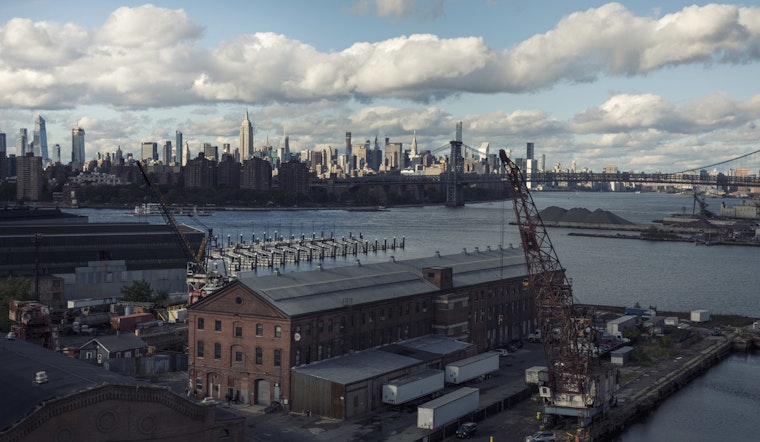
Brooklyn's city-run Navy Yard has opted not to renew the lease of Easy Aerial, a drone manufacturer tied to Israeli security contracts, effectively ousting the company from the city's flagship industrial park. The timing lands just weeks after Mayor Zohran Mamdani was sworn in on Jan. 1 and after months of pickets and pressure from activists who argued the Yard should not host firms connected to military and border security work. Tenants, workers and elected officials are now trying to sort out what the move means for jobs, tenant vetting and how a city-owned campus walks the line between economic development and ethical concerns.
In a statement to JNS, the Brooklyn Navy Yard Development Corporation said it had "notified Easy Aerial at the beginning of the year" and framed the nonrenewal as a decision based on business considerations along with "operational and campus compliance matters." The corporation added that "there were no other factors in our decision," according to the outlet.
Easy Aerial's Contracts And Critics
Easy Aerial, which maintains U.S. operations and a presence in Israel, sells autonomous "drone-in-a-box" systems aimed at perimeter surveillance. The company has been linked to work for Israeli security forces and federal agencies, according to reporting by Truthout. That footprint put the firm in the crosshairs of a local campaign arguing that manufacturers operating on city-controlled land should not be tied to overseas conflicts or to expanded domestic surveillance.
Protests And Political Reaction
Organizers under the banner Demilitarize Brooklyn Navy Yard staged weekly demonstrations last year, pressing the Yard to remove tenants they said profit from warfare and militarized policing, as reported by the Brooklyn Paper. After word spread that Easy Aerial was on its way out, Councilmember Lincoln Restler praised the nonrenewal on X, writing, "This public asset should not be leasing space to companies producing drones that are being transformed into weapons of war," a statement relayed by the New York Post.
What Comes Next
The Brooklyn Navy Yard Development Corporation manages leasing across the Yard’s roughly 300 acres from Building 77 on Flushing Avenue and says it evaluates renewals based on lease terms and campus policies, according to its own materials. Those public documents emphasize job creation and industrial growth, while also flagging compliance as a factor in whether tenants stay or go. When the New York Post asked whether politics had any role in Easy Aerial's departure, "the Mayor's Office did not return messages," the outlet reported.
For activists, Easy Aerial's removal closes one chapter in a local fight over who gets to operate on public land. For others, it raises a new set of questions: what precise standards the Yard will use to judge future manufacturers, how ethical concerns will be weighed against employment and industrial policy, and whether those rules will be clearly spelled out for everyone watching.





