

























































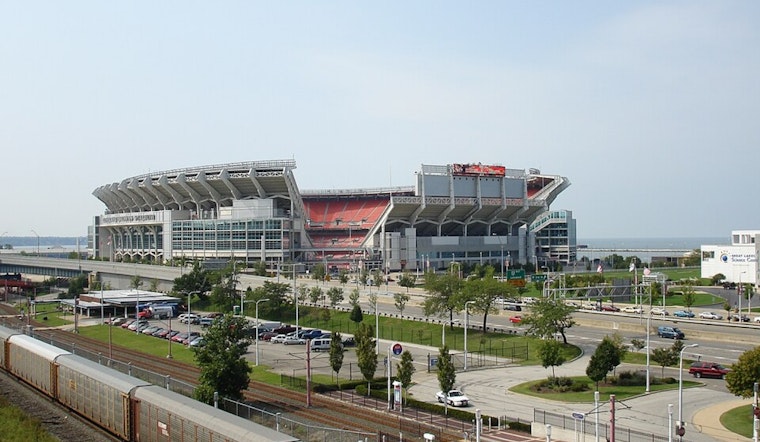
New renderings released this week are giving Northeast Ohio its clearest look yet at the Cleveland Browns' planned enclosed stadium in Brook Park, and it is a far cry from the lakefront cold-weather grind fans are used to. The images, credited to the stadium's designers, show a pitched, translucent roof, an intimate seating bowl and a reimagined Dawg Pound that reads more like a vertical fan wall than the end-zone bleachers many remember. Team officials say the venue is meant to host year-round events as the centerpiece of a mixed-use district planned on roughly 176 acres next to Cleveland Hopkins International Airport.
The Browns published the new photo set and a letter to season-ticket holders on their website, laying out a vision for a covered Huntington Bank Field and an adjoining entertainment district with an emphasis on natural light, seating comfort and crowd circulation. According to ClevelandBrowns.com, the club says the roof will be "transparent," the upper decks will sit closer to the field than at many NFL venues, and the complex is designed to keep the area active throughout the year, not just on Sundays.
What the renderings show
The latest visuals put a spotlight on an angled, sloped roof that the lead architect says should help clear snow while cutting down on materials and weight. Wide concourses ring the stadium, which the team says are intended to trap and amplify gameday noise instead of letting it drift away into the winter air.
Local coverage also points to a "vertical" Dawg Pound wall beside the visiting team's entrance, turning the traditional end-zone bleachers into something closer to a stacked supporters' section. That feature is visible in images credited to HKS. Fans can flip through the full photo gallery at WKYC, while WOIO breaks down more of the design choices.
Where the project stands
Haslam Sports Group and its partners say they have moved forward on land agreements for the 176-acre Brook Park site and that preparatory work is underway, with the team still aiming to open a new home after its Huntington Bank Field lease ends in 2028. In the team's own materials, the project is described as roughly a $2.4 billion investment with at least $1.2 billion in private capital and plans for hotels, apartments and retail ringing the stadium footprint, according to ClevelandBrowns.com.
Builders with extensive NFL experience have been tapped to lead construction and delivery, although the Browns say a formal groundbreaking date and detailed engineering work are still to come as permitting and design efforts roll forward. Sports Business Journal has additional background on the construction team and approach.
Permits, money and politics
The road to Brook Park has not been smooth. The Ohio Department of Transportation previously raised air-space concerns tied to the stadium's proximity to Hopkins, and the city of Cleveland challenged parts of the relocation plan before the sides hammered out a deal. The Associated Press reports that the parties reached a $100 million agreement and that ODOT later approved a key permit after Federal Aviation Administration analysis.
Financing plans currently center on roughly $1.2 billion in owner investment and $600 million in state support, according to the same reporting, with state analysts publicly questioning some of the projected revenue streams that underpin the deal. Those legal and funding wrinkles, along with the need for continued coordination with Hopkins Airport, mean the timeline still depends on regulatory approvals and political sign-off, and state-level reviews have kept the scrutiny focused squarely on the project.
Whether fans are fired up by the sleek look or worried about access and cost, the new images spell out how the Browns and their partners see a year-round entertainment district anchored by an enclosed Huntington Bank Field. Brook Park officials and regional planners will now have to weigh promises of jobs and tax revenue against traffic headaches and airport impacts as the proposal inches from renderings toward reality. For background on earlier site work, see our coverage from when the new enclosed stadium first got shovels in the ground.





