

























































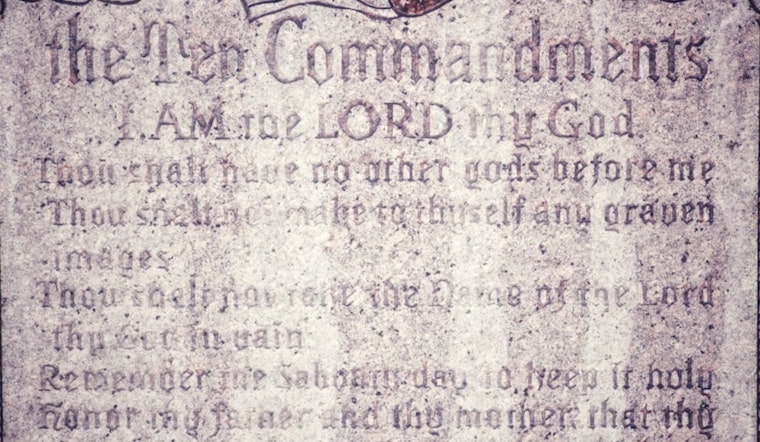
Ohio lawmakers are pushing a bill that would let public schools hang the Ten Commandments on classroom walls, and the debate over where faith ends and state begins has flared right on cue.
Senate Bill 34, formally titled the Historical Educational Displays Act, would require local school boards to adopt a policy to display at least four items from a nine document list, the Ten Commandments included, in social studies and history classrooms for grades 4–12, as outlined by the Ohio Legislature. The bill also lets districts accept donated displays or money for them and allows monuments or markers featuring any of the listed texts.
That is where the fight starts. As reported by Cleveland.com, "Today in Ohio" podcast hosts Laura Johnston and Chris Quinn argued that the proposal looks like an effort to inject religion into taxpayer funded classrooms and said presenting the Ten Commandments as a historical document is misleading. They also warned that the opt in donation setup could let outside groups effectively decide what ends up on classroom walls.
Opposition groups have not been shy either. The Freedom From Religion Foundation Action Fund called SB34 "deceptive" and warned that donated Ten Commandments displays would, in practice, force religious content into schools, according to the FFRF Action Fund. The ACLU of Ohio submitted formal opponent testimony labeling the measure "a plainly obvious attempt to impose explicit religious beliefs" on students in public schools, and representatives from the ACLU of Ohio warned that the donor route would pressure local boards to accept religious displays that they might otherwise decline.
Supporters insist the bill is about civics, not conversion. Sponsor Sen. Terry Johnson praised the proposal as a way to "expose our students to the documents which have, in America, served as the backbone of our legal and moral traditions," per the Ohio Senate. Advocacy organizations such as the Center for Christian Virtue have boosted hearings on the bill and urged supporters to contact lawmakers.
Legal Questions And Precedent
Legal scholars and civil liberties groups say a broad requirement to post the Ten Commandments in public school classrooms is almost guaranteed to draw lawsuits. The U.S. Supreme Court struck down a Kentucky law that required Ten Commandments postings in public schoolrooms in the 1980 case Stone v. Graham, finding that the statute lacked a secular legislative purpose. That ruling is expected to be central to any fight over SB34’s constitutionality, according to the Court’s opinion archived at Cornell's LII.
What Happens Next
SB34 cleared the Ohio Senate in November and landed in the House Education Committee in early February. Legislative trackers report that the bill has passed the Senate and moved to the House for consideration, with any House action serving as the final legislative step before it would go to the governor, and legal challenges would likely follow if the measure advances. The bill’s progress can be followed on trackers such as LegiScan.





