

























































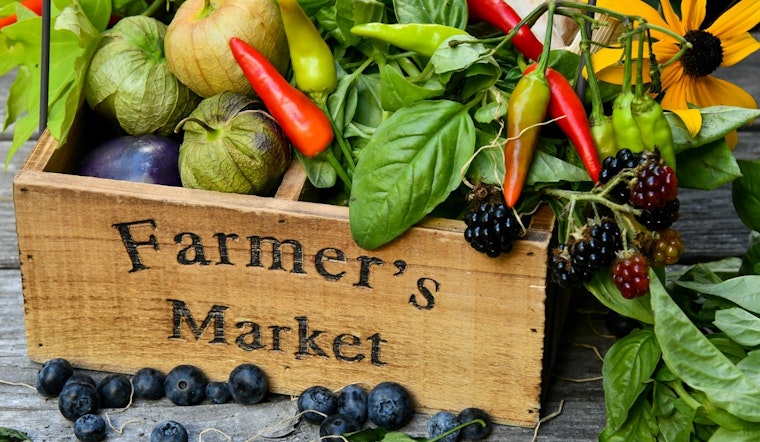
On a stretch of Crenshaw Boulevard in Hyde Park, a once-quiet juice counter has been reborn as a full-blown community food hub, quietly rewriting the neighborhood’s corner-store script. The space now doubles as a community market, commissary kitchen, and juice bar, where cultural staples share shelf space with an alkaline and vegan menu. Inside, crates of exotic fruit — including soursop and chirimoya — sit alongside a breaded, plant-based “soursop fish” sandwich that has taken off online. For neighbors, the goal is straightforward: put more fresh produce on the block while opening doors for Black and BIPOC farmers and local food entrepreneurs.
Crenshaw has long been a crucial hub for everyday food access, even as gaps in brick-and-mortar retail persist. The weekly market at Crenshaw and Slauson, noted by Food Access LA, runs every Saturday with CalFresh acceptance and Market Match, giving residents a vital supplement to the year-round storefronts and pop-ups scattered across South L.A. The new hub’s founders say their storefront is designed to plug the holes between those periodic markets and the daily need for affordable, fresh food.
Inside The Hub
The strip-mall spot once known as Kathy’s Kitchen now anchors Imani Gardens in front, with two resident chefs rotating through a shared commercial kitchen in back. As reported by the Los Angeles Times, chef Amin Muhammad turns out vegan pizzas, navy bean soup, and frozen prepared dishes, while Wolf Collins of Electric Wok stocks the case with alkaline grab-and-go sandwiches and stir-fried quinoa.
When soursop is in season, Collins takes the unripe fruit, coats it in chickpea flour and spelt crumbs, fries it, and dresses it like a fish filet. The Los Angeles Times reports that this “soursop fish” build has gone “ridiculously viral” on TikTok and Instagram, drawing curious locals and food tourists alike to a tiny Hyde Park counter.
Farm-To-Store Ambition
The hub is meant to be more than a clever sandwich. It is one piece of a broader effort to strengthen markets for Black farmers and build cooperative food infrastructure from the ground up. As detailed by Civil Eats, the Ujamaa Farmer Collective has attracted roughly $1.25 million in support and, in 2024, purchased a 22-acre parcel outside Woodland to establish shared plots and test new distribution models. The Crenshaw hub’s founders say the long game is to own both buildings and farms, so producers and community members control every link in the supply chain.
Why It Matters
That vision is unfolding against a stark backdrop of land loss among Black farmers. Testimony to the House Agriculture Committee notes that Black farm operators made up roughly 14 percent of U.S. farmers in the early 20th century and now represent less than 2 percent. Advocates commonly cite decades of discriminatory lending, heirs’ property disputes, and policy barriers as key drivers of that decline. The hub’s founders argue that cooperative markets and shared ownership are practical, local steps toward reversing those numbers.
For now, the Crenshaw Food Hub is modest: produce stacked up front, a freezer of prepared dishes humming in the corner, and a shared calendar that parcels out kitchen time to local cooks. But the people behind it are not thinking small. “We could actually build the whole food system and be our own solution to food deserts,” one partner told the paper. According to the Los Angeles Times, the next big move on the board is to buy the building outright and eventually clone the model in other cities.



