

























































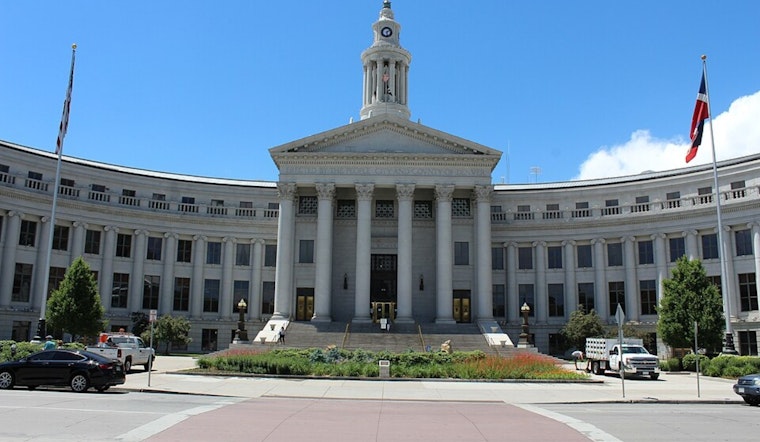
Denver is in the middle of a $1.5 million renovation of its historic City and County Building council chamber, a facelift meant to modernize wiring, widen aisles, and make the dais wheelchair-accessible. There is one glaring twist: Councilmember Chris Hinds, the city’s first councilmember who uses a wheelchair and the person you might expect to be front and center in that planning, says he was not consulted.
The construction has pushed City Council meetings into the smaller Parr-Widener Community Room while crews work on new seating, audio upgrade,s and a redesigned dais. Hinds has told reporters that some of the planned elements will meet only the minimum wheelchair standards and that he was left out of the project planning entirely.
Why the City Says the Work Is Needed
As reported by Colorado Politics, the roughly six-month project began in December 2025 and is scheduled to wrap by the end of June 2026. It is funded through the city’s Capital Improvement Fund and its ADA program. City officials say the money is aimed at fixing outdated wiring and addressing the chamber’s lack of accessible circulation for wheelchairs.
While that work is underway, the council has shifted regular meetings to the Parr-Widener Community Room, which comes with tighter seating and a cozier feel than the ornate main chamber, according to Denverite.
Inside the Overhaul
The renovation targets some of the chamber’s most visible features. The city plans to remove the raised step at the council president’s desk, curve the dais to improve sightlines, and swap out the individual desks that date to 1932 for a single long desk that allows more room for wheelchair movement, The Denver Gazette reports.
An adjustable lectern is set to be installed for public speakers, aisles in the gallery will be widened, and some of the seating will be converted to wheelchair-accessible spaces. Officials say the project also includes new wiring and improved acoustics to better support hybrid meetings that mix in-person and remote participation.
The Accessibility Advocate Left Out
Councilmember Chris Hinds told The Denver Post that he was not brought into the planning process and criticized parts of the design, saying that new ramps will only meet minimum wheelchair-width requirements.
The Denver Post also reports that councilmembers Shontel Lewis, Darrell Watson, and Diana Romero-Campbell have moved three of the historic desks to their district offices and that the council voted to donate six of the 94-year-old desks to the Museum of Denver. Councilmember Jaime Lewis called moving ahead with the project without consulting Hinds “disrespectful,” and the Museum of Denver nonprofit has applied to use the second floor of the McNichols Civic Center Building, the Post notes.
Public Access While the Dust Flies
With the council squeezed into the Parr-Widener room, city staff is encouraging residents to watch meetings online or on Comcast Channel 8, since seating in the temporary space is limited, Denverite reports. Remote testimony options are still available for public comment.
Officials stress that the renovation is designed to increase access for a broader set of users, not just a single councilmember, and say they expect to return to the upgraded main chamber once work finishes in June.
Why the Fine Print on Access Matters
Hinds’ objections land against a longer track record. Since his election in 2019, he has pushed the city to confront accessibility gaps after running into barriers in City Hall and at public events, as earlier reporting by The Washington Post documented.
The federal 2010 ADA Standards set minimum technical requirements for accessible routes and wheelchair spaces, including clear widths and ramp specifications, and advocates point out that simply meeting those minimums does not always result in comfortable access for two-way traffic. That point is underscored in the U.S. Department of Justice guidance on ADA.gov. The tension between updating a historic chamber just enough to clear the legal bar and designing a genuinely usable space sits at the center of this dispute.
City council spokesman Robert Austin has said the city’s Access For All division was involved in planning and that the changes are intended to serve “more people than just Hinds,” Colorado Politics reports. With public comment still open at council meetings even during the move, Denver residents will get an early look at whether the finished chamber ultimately lives up to the city’s accessibility promises.





