

























































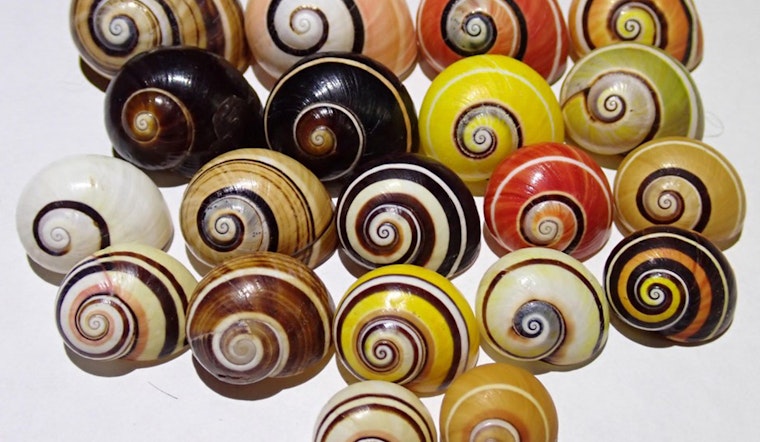
Hawaii’s land snails are disappearing at a pace that has scientists using words like “devastated” and “erased.” A sweeping new review led by University of Hawaiʻi researcher Robert Cowie finds that island land‑snail faunas worldwide have been hammered, with losses on many islands falling in the 30% range and climbing to about 80% on some volcanic islands. The Pacific, and Hawaiʻi in particular, stand out as hot spots of loss, with researchers estimating that only about 10–35% of the roughly 750 native land‑snail species in the islands are still around. Scientists stress that this is not just about a few empty shells missing from museum drawers. It points to serious damage to native forests and to cultural heritage woven around these once‑abundant species.
New review lays out scale of losses
The review pulls together decades of field surveys, long‑term “shell bank” work in the soil and published research to chart where and how these extinctions unfolded across oceanic islands. The authors report that extinction levels are often in the 30–50% range and can reach about 80% on some islands. Their findings appear in Philosophical Transactions of the Royal Society B.
Invasives and people erased whole faunas
The authors describe a two‑phase decline. First came deforestation and habitat transformation that followed human arrival, wiping out species tied to intact native forests. Later, a second and often faster crash hit when non‑native predators arrived. Species brought in as biological controls for agricultural pests, especially the rosy wolf snail (Euglandina spp.) and the New Guinea flatworm (Platydemus manokwari), along with rats, have been tied to rapid collapses of native snail communities. Work on predator impacts in Biological Invasions shows how attempts to control pests instead helped drive native snails toward extinction.
Hawaiʻi’s tree snails and the “shell bank”
Hawaiʻi alone once supported at least 750 species of land snails, the vast majority found nowhere else on Earth. Today, scientists estimate that only about 10–35% of that original fauna survives. Because snail shells can linger in the soil for decades to centuries, researchers use what they call a “shell bank” to detect species that vanished before modern surveys began, then combine those records with museum specimens to reconstruct older extinction events. As outlined by University of Hawaiʻi News and described by the Pacific Biosciences Research Center, those shell‑bank data and historical collections form the backbone of many of the study’s reconstructions.
Conservation is slow but not idle
To keep what is left from disappearing, conservation teams have turned to captive‑breeding labs, predator‑proof fences and carefully planned reintroductions. The U.S. Fish & Wildlife Service and state partners have documented recent releases of captive‑reared snails and credit long‑running breeding programs with preventing some species from vanishing outright. Long‑term analyses of the University of Hawaiʻi captive‑rearing program also show how hard recovery can be. Small founding groups, low reproductive rates and genetic bottlenecks all slow population growth and support the case for using larger founder numbers and maintaining strong, steady backing for these programs, according to the U.S. Fish & Wildlife Service and a demographic study in PeerJ.
What the review means for Hawaiʻi
The review’s authors note that climate change has not yet been the primary driver of land‑snail extinctions, but they warn that it could bring a third wave of losses by shrinking the cool, high‑elevation habitats that many endemic species need to survive. To head off that scenario, they call for targeted field surveys to find remaining populations, stronger funding for ex situ efforts built on larger founder groups and more aggressive control of invasive species. Without coordinated moves on all of those fronts, much of the world’s island snail diversity may persist only as shells buried in soil, a literal fossil record of what has already slipped away, as reported by Phys.org.





