

























































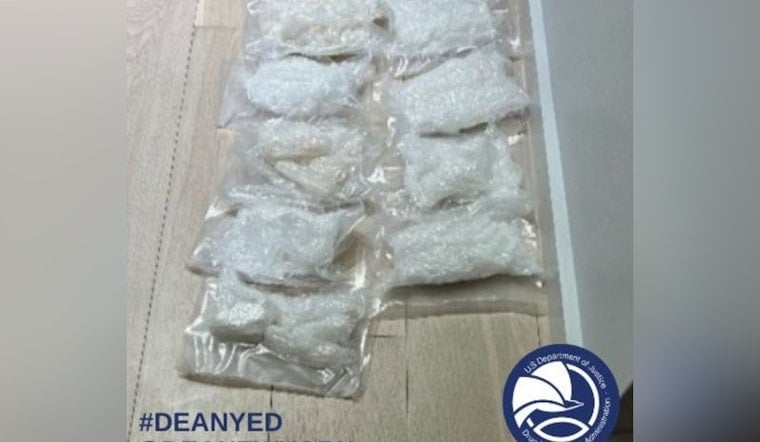
On a Tuesday in mid-February, a federal drug operation in New York City pulled roughly 20 pounds of methamphetamine and about $50,000 in cash off the streets, with one person taken into custody. The DEA New York Enforcement Division's Tactical Diversion Squad carried out the bust on Feb. 17, describing it as part of a broader push to disrupt synthetic-drug shipments into the city and cut into high-volume meth trafficking.
What The Agency Posted
In a brief social media update, DEA New York said its Tactical Diversion Squad made one arrest and recovered "approximately 20 pounds of meth" and "$50k" during the Feb. 17 operation. The post framed the work as part of the division's effort to "do its part in saving lives," echoing language federal officials often use to cast drug interdiction as a public health measure rather than just a criminal enforcement tool.
The social post did not name the person arrested or list any specific charges, and it did not offer details about where in the city the seizure took place or how the investigation began.
Why A Tactical Diversion Squad Is On A Meth Case
Tactical Diversion Squads pair DEA agents with local investigators and federal partners to target both controlled-substance diversion and trafficking, according to the U.S. Attorney’s Office for the Southern District of New York. Past TDS operations have brought together the DEA, NYPD, state police and oversight agencies to go after illegal prescribing and broader drug networks.
Putting a diversion squad on a meth seizure like this signals how those teams are now used to hit synthetic stimulant flows that feed local markets, not just pill mills or prescription fraud. It is another way for federal and local partners to lean on the same specialized unit as the drug supply shifts.
How This Fits Into The Bigger Drug Picture
The seizure lines up with what federal officials describe as a national pattern. DEA assessments say nearly all methamphetamine sold in the United States today is manufactured in Mexico then shipped into domestic markets, and the agency has warned that meth is increasingly mixed with other synthetic drugs.
The DEA's 2025 National Drug Threat Assessment notes that synthetic drugs and "drug cocktails" complicate enforcement and raise overdose risks for users who often do not know exactly what they are taking. Large urban interceptions, federal officials argue, are one of the few ways to hit the supply chain before those mixtures reach neighborhood dealers.
Past New York Seizures Show The Scale
The Feb. 17 meth seizure is not the only big haul DEA New York has touted recently. In December 2024 the office announced a separate takedown that netted more than 85 pounds of cocaine and fentanyl along with roughly $420,000 in cash. According to DEA New York, that earlier case grew out of a months-long wiretap and task force investigation.
Put together, the recent busts highlight the federal focus on high-volume shipments that can quickly flood local markets if they make it past law enforcement.
What Happens Next
For now, the public record on the Feb. 17 operation is thin. The agency's post did not identify the arrested person or specify charges, and it did not link to any complaint or indictment. DEA New York's short social media update remains the only public reference to the case.
If prosecutors move forward, formal charging documents are typically filed in federal court after lab testing and paperwork are complete. Those filings would be expected to spell out where the drugs were found, what investigative tools were used and how the case fits into the broader fight over synthetic stimulants in New York City. We will be watching court dockets and agency updates for identifying details and any eventual charges.



