

























































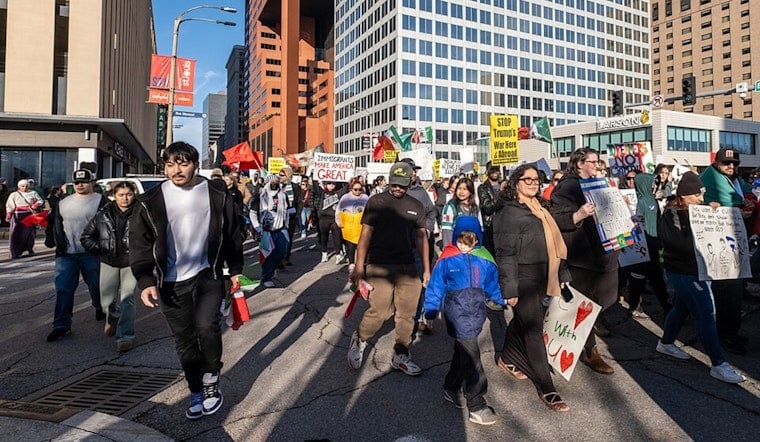
In Redlands, about 150 high-school students stepped out of class earlier this month to protest federal Immigration and Customs Enforcement actions and to pressure their elected school board over policies they say sideline immigrant and LGBTQ+ students. Redlands Unified marked those absences as truancy and temporarily yanked access to sports, dances, and other extracurricular activities. Student organizers argue the move is punitive and could scare teens away from speaking out just as they are trying to channel anger into civic action.
According to the Los Angeles Times, district officials told students their privileges would be restored only after they complete a Saturday-school session or log four hours of community service. The walkouts drew participants from several middle and high schools and culminated in a downtown demonstration, dubbed “Peace Corner.” District leaders insist the response is about enforcing attendance rules, not punishing the message behind the protests.
"Students have the right to express themselves peacefully," Redlands Unified public information officer Christine Stephens told the Los Angeles Times, adding that the district also has to keep a safe, supervised learning environment. Student organizers counter that they went in expecting some kind of pushback, framing the walkouts as a real-world civics lesson you will not find in a textbook.
What the law allows
California law gives students one excused absence per school year for a civic or political event if they notify the school in advance, and it requires schools to allow make-up work for that missed day. As outlined by the Governor's office, those protections are narrow and do not automatically cover large, unsanctioned walkouts from discipline under district attendance policies.
The American Civil Liberties Union points out that "you do not lose your right to free speech just by walking into school," while noting that administrators may discipline speech that materially disrupts instruction and may not levy harsher penalties because of a student's viewpoint. For practical guidance on what that looks like in real life, the ACLU directs students to its resources on protest rights, campus speech and walkouts.
Local politics are part of the backdrop
These protests did not emerge in a vacuum. Tension in Redlands has climbed since a conservative bloc captured control of the school board in 2024 and began pushing measures that critics describe as censorious, including proposals to restrict which flags can be displayed on campus and to establish a formal process for parents to challenge library books and other materials. Reporting by the San Bernardino County Sentinel chronicles those fights and the board votes that helped set the climate now fueling student activism.
How districts typically respond
County-level guidance tells school leaders that walkouts may be treated as unexcused absences or disruptions to instruction, while also urging administrators to look for teachable moments and to plan around safety when protests are expected. The Los Angeles County Office of Education’s resource page on navigating student protests notes that districts can also seek attendance waivers and use other tools when large numbers of students miss class in ways that affect funding or campus operations.
Student organizers in Redlands say they are not done and are asking the school board to put in writing that immigration agents will not be allowed onto campus. The district, for its part, says it will keep enforcing attendance rules as it tries to strike a balance between safety and expression. Legal advocates caution that if discipline is perceived as punitive and based on students’ viewpoints, the fallout could eventually move from the protest line to school board meetings and, potentially, into court.




