

























































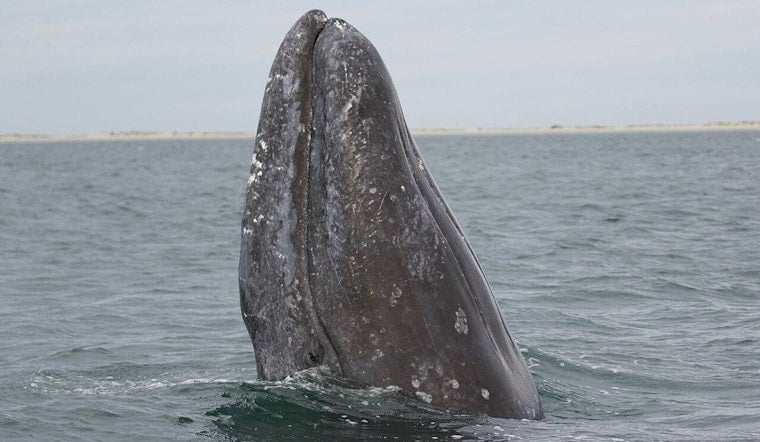
On a wind-battered patio high above the Palos Verdes cliffs, volunteers with the Gray Whale Census and Behavior Project are staring at a migration that feels eerily thin. Last season, they logged the lowest southbound and northbound gray whale totals on record, watched calf sightings collapse to almost nothing, and saw more emaciated animals than anyone there is comfortable with. To the watchers on the bluff, the disappearing whales look less like a fluke and more like part of a long, unsettling slide that researchers link to changing ocean conditions.
Volunteers Keep The Count Rolling
Alisa Schulman-Janiger, who has steered the project for decades, told SFGATE, "We've been looking at the same water since 1984." Through whale season, trained observers cover the Point Vicente patio every daylight hour, chalking tallies onto a whiteboard and posting daily numbers. The cliffside station has become a workhorse of citizen science, capturing fine-grain, nearshore details that broader surveys can easily miss.
Record-Low Counts At Point Vicente
The season summary from the American Cetacean Society’s Los Angeles chapter was blunt. Volunteers recorded 130 southbound gray whales and, for the first time, not a single southbound calf. On the return trip north, they counted 485 whales and just eight calves, according to ACS-LA. The writeup also flagged a noticeable rise in "skinny grays" and described the season as a dramatic year-to-year drop. For the Palos Verdes crew, those numbers are a sobering nearshore snapshot that lines up with worrisome reports from other parts of the coast.
Federal Numbers Back Up Local Fears
NOAA Fisheries now pegs the eastern North Pacific gray whale population at roughly 11,700 to 14,450 animals for the 2024 to 25 season. That estimate is the third-lowest in the agency’s time series, and it follows an Unusual Mortality Event that ran from late 2018 through November 2023. NOAA ties the die-off to "localized ecosystem changes" in sub-Arctic and Arctic feeding grounds that cut into the whales’ food supply and pushed calf production down. In other words, what Palos Verdes volunteers are seeing from the cliff fits into a much larger, multi-year decline.
Why Scientists Are Worried
Research published in Science in 2023 links gray whale boom-and-bust cycles to prey availability and shifting Arctic sea ice. When prey drops and feeding access shrinks, mass mortality and weak calf years tend to follow. Scientists point to declines in benthic prey, the tiny amphipods and other bottom dwellers gray whales Hoover up, as a likely culprit that leaves animals thin and less able to reproduce. That body of work hints that the current downturn may not snap back quickly unless Arctic food webs and feeding conditions steady out.
The Land Is Slipping Underfoot
The ground beneath the watchers is restless too. The Palos Verdes Peninsula has seen accelerated landslide movement since heavy rains in 2023, with the city reporting roadway damage, utility problems and stepped-up monitoring in response. The City of Rancho Palos Verdes keeps a running log of land-movement updates, mitigation work and monitoring efforts. SFGATE also reported that crews were out in March fixing a stretch of road that locals said bobbed "like a roller coaster," a not-so-subtle reminder that the volunteers’ lookout and public access to the patio face some of the same climate-driven pressures that are hammering the whales offshore.
What Comes Next On The Bluff
ACS-LA plans to be back on the Point Vicente patio next season, clipboards and binoculars in hand, while NOAA Fisheries continues its systematic surveys and calf-counting work. On land, local officials are pursuing monitoring, mitigation and buyout options in the most vulnerable neighborhoods, as scientists push for stronger protection of key Arctic feeding habitat. For now, the volunteers stay put on the edge of the continent, counting individual blows on the horizon and quietly hoping the next migration looks a little less empty.





