

























































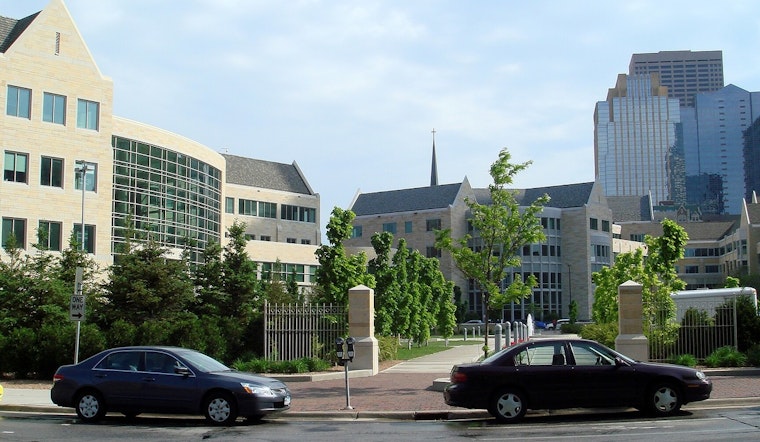
The University of St. Thomas is floating an early blueprint to pack more student beds, off-street parking, and classroom space into a two-block stretch just south of its historic Summit Avenue campus, and longtime neighbors already know the drill. The concept plan, shown to the West Summit neighborhood advisory committee last Tuesday, would reopen a 2004 conditional-use framework that still dictates how tall the school can build, how big its gathering spaces can be, and which Summit Avenue houses must stay standing. University leaders said any actual construction would roll out in phases and is not expected to start for at least five to 10 years, but the mere prospect is already reviving familiar neighborhood fights over teardowns, parking, and how far campus should spill into adjoining streets.
2004 Permit Still Calling the Shots
The ground rules for this two-block expansion zone were locked in by the city’s 2004 conditional-use permit, which lays out building heights, parking limits, and environmental mitigation requirements. On the west block, residential buildings are capped at 40 feet. On the east block, up to 65,000 square feet is reserved for a potential second academic building, and no auditorium, performance hall, or athletic facility in the area can top 250 seats, according to the 2004 conditional-use permit. The permit also orders the university to preserve six Summit Avenue houses and to keep Finn Street open in that block for at least 30 years.
University Sketches Scope and Slow Timeline
As reported by MyVillager, university staff told the advisory committee they want to reopen and potentially amend that permit so they can add more campus housing, off-street parking, and classroom space within the same two-block area south of campus. Officials said any new buildings would likely go up in phases and not for another five to 10 years, and they reiterated that St. Thomas plans to keep a combined enrollment cap of 10,000 students across its St. Paul and Minneapolis campuses. Administrators also signaled they intend to work with neighborhood groups and city officials before filing any formal changes.
Neighbors Weigh In as Housing Tensions Simmer
Neighbors at the meeting offered a mix of wary support and pointed reminders about past dustups. “A lot of trust was violated with the arena,” UST official Ryan Schoenecker said, and neighborhood leader Tom Alf told attendees that “a fair amount of us would appreciate more on-campus housing and parking,” as reported by MyVillager. Local reporting has documented a steady stream of small houses being replaced by larger multi-unit buildings near the campus, a trend analysts and community councils say has increased pressure on single-family stock. Streets.mn recently detailed similar six-unit projects near St. Thomas that have stirred neighborhood debate.
How a Permit Change Would Play Out
Rewriting the 2004 CUP would set off a full public process, including formal city review, public hearings, and sign-offs from both the Planning Commission and the City Council. The permit itself spells out a list of mitigation steps the university must satisfy before any shovels hit the dirt, including environmental testing, traffic and pedestrian management plans, preservation commitments, and the creation of an ongoing university/community advisory council to track impacts over time.
For now, the concept is more wish list than construction schedule. University leaders say any work would roll out in phases, and that the next move is more back-and-forth with neighbors. Residents can expect additional public meetings and formal filings in the coming years as St. Thomas tightens up a timeline and a detailed proposal for neighborhood groups to scrutinize.




