

























































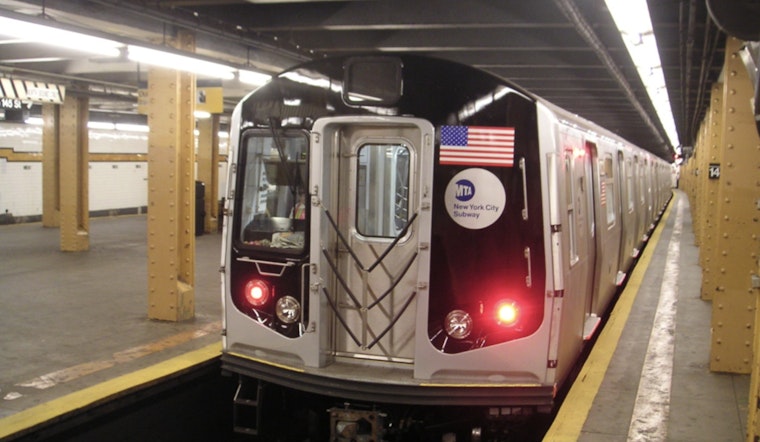
The Metropolitan Transportation Authority is getting ready to turn up the volume on advertising. Starting in June, the agency plans a pilot program that will pipe paid, 30 second audio ads into select subway and commuter rail stations, with the sound capped at 75 decibels. Riders and advocates say the move risks turning stations into a nonstop commercial loop and have compared the plan to an Orwellian attempt to commodify public space. For now, the spots would be limited to media, entertainment and sports advertisers.
A memo reviewed by the New York Post describes a "station audio advertisements" pilot that would allow ads as often as once every 10 minutes, each running up to 30 seconds, with a strict 75 decibel limit. The memo also reportedly bans any audio that mimics alarms, emergency messages or official MTA announcements, a guardrail meant to keep ads from sounding like something riders need to obey.
How loud is 75 decibels?
On paper, 75 decibels is roughly the sound of a busy city street for short bursts. In a tiled station packed with people and echoing train noise, though, even that level can carry down platforms and into adjoining spaces. Some riders worry that what looks modest in a memo could feel intrusive in a rush hour crowd when there is already plenty of ambient noise.
Why the MTA is doing this
Officials are pitching the pilot as a relatively small revenue play to help plug budget gaps. Advertising revenue was projected to hit $175,000,000 in 2025, according to AM New York, while the authority's planning materials list about $21,000,000,000 in operating costs for 2026, per the MTA. Planners say that by capping volume and limiting ad categories, they can test the format in a controlled way instead of flooding the whole network at once.
Boardroom outcry and the Fahrenheit 451 prop
The rollout already sparked drama in the boardroom. At a recent MTA board meeting, a critic showed up holding a copy of Ray Bradbury's Fahrenheit 451, using the book as a prop to protest the audio plan. Riders and advocates at the meeting and in coverage of it likened the proposal to a curb on public speech and another step toward saturating civic spaces with paid messages.
The same reporting noted that a previous platform advertisement was measured at 99 decibels in 2021, feeding concern that a written cap will not automatically stop intrusive sound in practice. "Audio advertising would degrade the passenger's experience to raise revenue a small fraction of a percent," one board critic said, according to the New York Post.
What MTA leaders say next
MTA Chair Janno Lieber said after the meeting that he had not known about the audio ad program beforehand. The authority now says it will fold a question about audio ads into rider surveys and conduct direct outreach to gauge reaction before considering any expansion. The pilot is scheduled to start in June and, at least initially, will be confined to select stations and to entertainment and sports spots, according to officials.
For now, transit watchers say the real tests will come down to enforcement and measurement: how the MTA actually tracks sound levels on platforms and whether riders feel the added noise is worth the extra dollars. If the pilot goes forward as planned, the fight over how much advertising belongs in New York's transit system is likely to move out of meeting rooms and into stations and lawmaker offices.





