

























































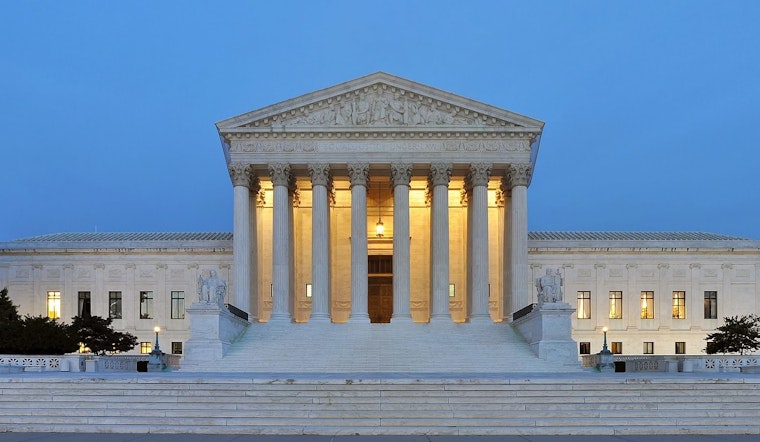
In a landmark ruling against the Trump administration, the U.S. Supreme Court has struck down President Donald Trump's widespread use of tariffs. According to CNN, the Court ruled that Trump's emergency tariffs, imposed on goods from nearly every country, exceeded the powers granted by federal law.
The tariffs, initially set in 2025 and expected to generate approximately $3 trillion over 10 years, as reported by the Congressional Budget Office and cited by FOX6Now, were imposed under the International Emergency Economic Powers Act (IEEPA). However, in a 6-3 decision, the Supreme Court determined the IEEPA "does not authorize President Donald Trump to impose his global tariffs." Justice John Roberts, writing for the majority, emphasized, "the president asserts the extraordinary power to unilaterally impose tariffs of unlimited amount, duration, and scope." He added, "he must identify clear congressional authorization to exercise it," reported by CNN.
BBC News highlighted that while this ruling affects many tariffs, it does not touch on all of them. For example, industry-specific tariffs implemented under Section 232 of the Trade Expansion Act of 1962 remain in place. The Supreme Court did not offer guidance on how to manage the more than $130 billion in tariff revenue already collected, a process, Justice Brett Kavanaugh wrote, that is likely to be a "mess."
Despite the ruling, Trump's tariff strategy has altered global trade behaviors. As FOX6Now reported, many businesses have already adapted by shifting their supply chains away from heavily targeted countries. This adaptability brings into question the actual long-term effects the Supreme Court's decision will have on importers. Businesses affected by the tariffs include a wide range of industries, from educational toy manufacturers to wine importers, all of whom had anticipated this decision to have significant financial implications.
There is still some uncertainty about future steps following the Supreme Court's decision. President Trump was noted by BBC News to have said, "We'll figure something out" before the judgment. The administration has painted the dispute in stark terms for the country, claiming that "with tariffs, we are a rich nation," but without them, "we are a poor nation." Meanwhile, small businesses challenging the tariffs warned against the "breathtaking assertion of power" to levy a tax without congressional oversight. As the dust settles on this ruling, businesses, consumers, and the administration alike will be watching closely to see how it shapes economic policy and international trade relations, as cited by CNN.





