

























































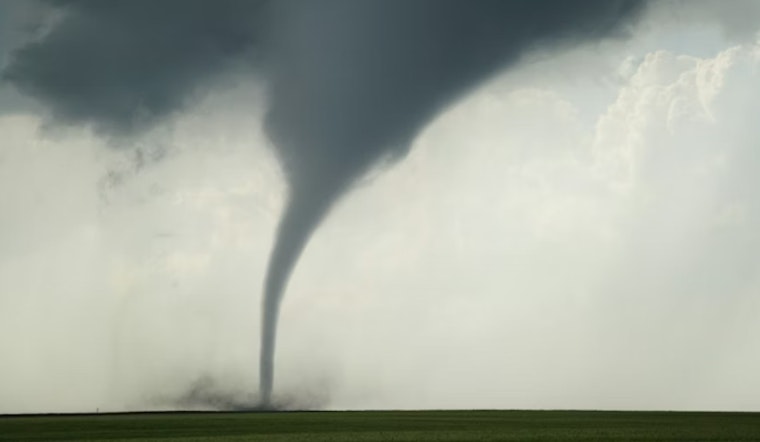
New federal probability maps show Tornado Alley continuing to creep east, and Wisconsin now sits inside a band of rising, long-term risk. The updated maps stitch decades of storm reports into a single view and point to more frequent damaging wind and hail events and a modest uptick in weaker tornadoes across parts of the state. For residents and local planners, it is about slowly rising odds rather than an overnight leap in catastrophic strikes, but the shift changes how communities think about year-round preparedness, as reported by NCEI.
What The New Federal Maps Show
The National Centers for Environmental Information and the Storm Prediction Center have released updated annual-probability maps for two windows, a 70-year period (1955–2024) and a 30-year period (1994–2024), that show darker, higher-probability shading extending into central and eastern parts of the United States and into parts of Wisconsin, according to NCEI. The maps estimate the chance that a tornado, damaging wind or significant hail will occur within roughly a 25-mile radius of any point, and the newest shading shows a noticeable eastward shift compared with older climatologies.
What It Means For Wisconsin
The refreshed imagery, and expert read of the data, indicate a modest rise in long-term odds for parts of the Badger State. Reporting by FOX6 highlights that over the 30-year window the probability of any tornado has nudged upward and that weaker tornadoes have become somewhat more frequent. FOX6's interpretation of the climatology shows a 70% to 80% probability of severe wind at or above 60 mph for parts of southwestern Wisconsin, roughly a 50% to 60% probability in the southeast, and an increase in the chance of hail at or above 0.5 inches into the 80% to 90% range. Those numbers describe long-term climatology, not the odds for any particular day.
Scientists See A Broader Eastward Trend
The new maps slot into a larger pattern researchers have been tracking: tornado activity has shifted in recent decades away from parts of the central Plains and toward the lower Ohio Valley, the Deep South and portions of the Midwest, with a growing share of events occurring outside the traditional spring peak, according to coverage of recent studies by Weather.com. Scientists caution that reporting practices, natural variability and possible climate influences all play a role, so the maps are best read as a fine-tuning of historical odds rather than a simple, one-cause verdict. For Wisconsin, the practical effect is a longer season of concern and more frequent damaging wind and hail events, even if violent tornadoes remain relatively uncommon.
How To Prepare
Officials say the smart response is practical preparedness: update plans, review local shelter options and treat severe-weather readiness as a year-round habit, not a once-a-spring chore. The National Weather Service recommends having a clear shelter plan, an emergency kit, multiple ways to receive warnings and moving to the lowest interior room or a basement during a tornado warning, per guidance from the National Weather Service. Communities with a large number of mobile homes or older housing stock are urged to pay special attention to where neighbors and residents will go when high wind and hail threaten.
Maps that change slowly can still carry big practical consequences. These updated NCEI and SPC images give Wisconsin officials and homeowners new data to factor into building, sheltering and emergency plans. Keep an eye on local forecasts and heed warnings, because climatology can sketch the odds, but daily forecasts and watches tell you when it is time to act.





