

























































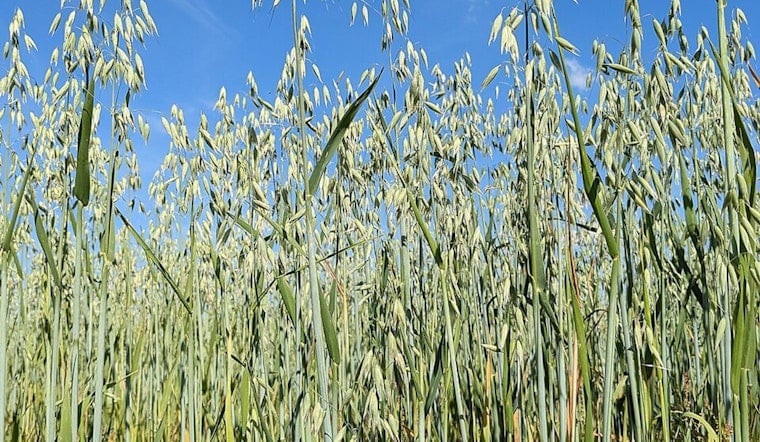
A farmer-owned oat mill rising on the edge of Albert Lea is aiming to redraw Minnesota’s small-grains map, giving growers a nearby buyer for food-grade oats and a fresh revenue stream for corn-and-soy operations. Backers say the plant will churn out traceable, gluten-free oat ingredients for food companies and could pull tens of thousands of acres back into oat rotations. University breeders and extension educators are lining up seed and training so farmers are ready for both the agronomy shift and the new marketing play.
Mill, Market And Miles
Green Acres Milling is being built as a regional, farmer-led processing hub, and organizers say it is expected to be running by late summer with capacity measured in millions of bushels per year. As reported by Agweek, founders have described the project as roughly a $68 million effort that could process about 4 million bushels annually, and company leaders say buyer demand drove the decision to build at that scale.
City Approvals And Early Estimates
Albert Lea officials moved quickly to sign off on the development and line up infrastructure work, even though the earliest city documents sketched out a smaller plan. The Albert Lea City Council’s development agreement and related coverage outlined an initial 135,000-square-foot facility projected to handle about 2 million bushels per year, plus modest tax-increment support for the site in the Jobs Industrial Park. As reported by the Albert Lea Tribune, that local backing helped clear the way for construction and site work last year.
Farmer-Owners And Public Support
The blueprint grew as more farmer investors signed on and public grant programs stepped in to bolster processing infrastructure. Per the Minnesota Department of Agriculture, Green Acres received a $1.5 million Resilient Food Systems Infrastructure grant and plans to source oats from more than 100 farmer-owners across a roughly 120-mile “oat-shed.” Steward, the project’s financing partner, lists the initiative as a roughly $68.8 million, farmer-owned milling project focused on identity-preserved, traceable oat products for regional food brands.
A Variety Built For Food-Grade Oats
On the seed side, plant breeders at the University of Minnesota have released a new oat called MN-Amber that was developed with food-grade milling in mind. According to the University of Minnesota Agricultural Experiment Station, MN-Amber delivers improved yield, test weight and grain protein compared with earlier releases and will be available to certified seed producers this spring, with wider seed supplies expected later. “It’s the culmination of a lot of work,” oat breeder Kevin Smith said of the renewed, food-grade focus.
Soils, Water And Nitrogen Credits
Extension staff and state programs are also highlighting the soil-health and water-quality upside that comes with adding oats to the rotation. University of Minnesota Extension summarizes research showing that slipping small grains into traditional corn-soybean rotations or using oats as a fall cover crop can reduce nitrate concentrations in drainage water. Underseeding oats with medium red clover can provide nitrogen credits of roughly 75 pounds per acre for the following corn crop. Those environmental and fertility benefits are a key reason state and nonprofit programs are pushing small-grain diversification across the Upper Midwest.
Storage, Insurance And Other Hurdles
There are still practical hurdles. Crop insurance rules, price risk compared with corn and soy, and storage systems tuned to other grains all factor into farmers’ decisions. USDA National Agricultural Statistics Service data show Minnesota ranks second in the country for on-farm grain storage capacity, behind Iowa, yet much of that bin space was designed for corn and soybeans and may need different handling, drying and airflow to be ideal for oats. As University of Minnesota Extension agronomist Jochum Wiersma told University of Minnesota Extension, “most of that capacity in the southern half of the state was built for corn and soybeans, not oats, which require different airflow.”
What Growers Can Expect This Spring
Organizers say the mill could shorten supply chains and pay premiums for traceable, allergen-free oats, and a number of growers are already testing the crop this spring. Landon Plagge and other founders told Agweek that farmer investment and firm buyer demand underpinned the project’s size, and outreach events around the mill have encouraged producers to try oats as a third crop. Local reporting and agriculture outlets note that many expect to haul loads one to two hours to the new plant, and some organizers, including Green Acres staff, say they will be planting test acres themselves this season. As reported by Morning Ag Clips, the Green Acres development team and several partner farmers are already seeding trial fields this spring as they gear up to supply the mill.





