

























































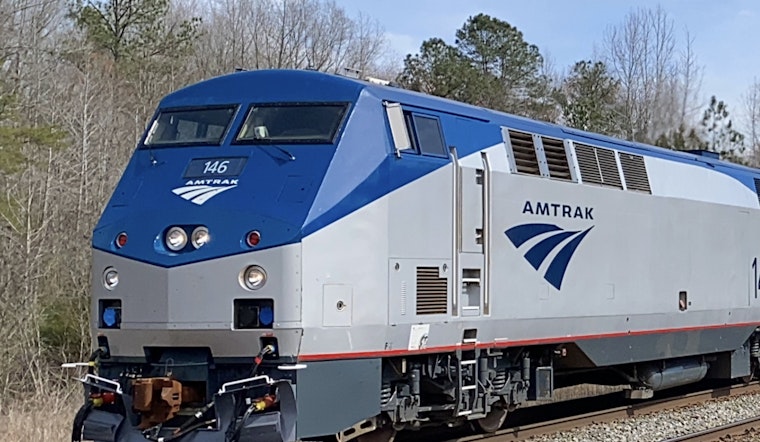
Amtrak says passenger rail service to Madison could roll out as early as 2030, extending the existing Chicago-Milwaukee Hiawatha line west to new stops in Pewaukee, Watertown and downtown Madison. The plan would launch with twice-daily Chicago-Milwaukee-Madison service, although officials say that timeline still depends on federal approvals, track improvements and money actually showing up.
Amtrak spokesperson Marc Magliari told the Milwaukee Journal Sentinel the agency “aims to start the line as early in the 2030s as possible” and that it “could be (2030) or the year following,” while warning it is still too early to estimate how much federal funding or which railroad upgrades will be needed, the paper reported. According to the Milwaukee Journal Sentinel, the Hiawatha West project is now in a stop-choice phase that will feed into Federal Railroad Administration review and environmental studies.
Where a Madison station might sit
The city’s passenger rail station study recommends a primary lakeside site along Lake Monona on John Nolen Drive, a short walk from Capitol Square, Monona Terrace and downtown hotels, with the Johnson Street Yard near the future Madison Public Market identified as a secondary option. A state announcement also says the historic state office building at 1 West Wilson Street, next to the lakefront, was listed for sale in December 2025; that parcel could shape redevelopment talks if a downtown station site is chosen. As outlined in the City of Madison study and a Wisconsin Department of Administration release, planners are weighing tight land constraints and design tradeoffs.
Timeline, approvals and funding
Even after station locations are finalized, the Federal Railroad Administration still has to approve the stops before preliminary engineering and environmental clearance can move forward, and any construction would need to lock in federal grants. The Bipartisan Infrastructure Law set aside roughly $102 billion for freight and passenger rail programs, which project leaders say finally creates a realistic funding pathway for new corridors. The Federal Railroad Administration and Amtrak outline the funding and regulatory steps projects like Hiawatha West must navigate.
Local steps and community input
Magliari told the Journal Sentinel that Amtrak’s Hiawatha team plans to hold a webinar and launch a website to gather public input on potential station locations. The paper also reported that local proposals already include a small platform and 65 new parking spaces along Marjean Lane in Pewaukee, and that planners are still sorting through operational questions like platform length, parking and bus connections. The Milwaukee Journal Sentinel has the schedule for upcoming outreach and next steps.
Why this could matter for riders
Supporters point to how quickly other new routes have caught on. Amtrak reported the Borealis reached 100,000 passengers in its first 22 weeks and later logged more than 200,000 riders in its first year, while state officials noted about 18,500 riders in the line’s first month. Planners say a Madison connection could give commuters and weekend travelers a genuine alternative to driving on I-94, particularly during peak congestion and holiday travel. Amtrak and a WIGOV bulletin chart the Borealis rollout and its early ridership.
Amtrak and local partners say they are trying to move as quickly as they can without skipping steps, with public outreach and FRA reviews still required before any engineering work starts. If approvals, environmental clearances and federal grants all fall into place, riders could see the Hiawatha West corridor move from plan to reality within several years, with 2030 as the earliest feasible start under current plans.





