

























































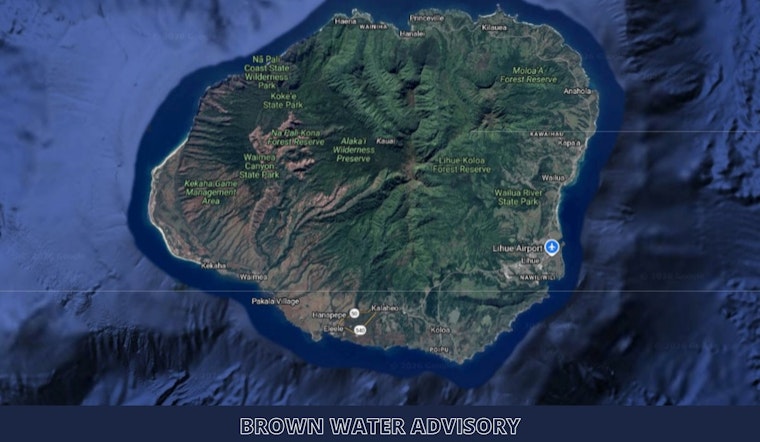
Kaua‘i’s usually crystal-clear shoreline is under a statewide health warning after days of heavy rain sent muddy runoff pouring into the ocean. The Hawaiʻi Department of Health has issued a brown water advisory for much of the island, urging beachgoers to steer clear of surf and stream mouths where the water looks brown or murky.
The advisory stretches across North Shore and East Shore communities and popular state parklands, including Hanalei, Princeville, Kīlauea, Wailua, Līhuʻe and Kapa‘a, along with Nā Pali Coast and Waimea Canyon parks. Officials say the discoloration is storm runoff that can carry soil, bacteria and other pollutants into nearshore waters.
A #BrownWaterAdvisory has been issued for the Island of Kaua‘i. The @HawaiiDOH advises beach users to stay out of waters when the water appears brown or murky, especially following storms or heavy rain. For more information: https://t.co/eZISUcXcit https://t.co/BDvarWbIyS
- Hawaiʻi State Department of Health (@hawaiidoh) March 11, 2026
According to the Hawaiʻi State Department of Health, anyone heading to the beach should stay out of the water whenever it looks brown or cloudy, especially right after storms or heavy rain. The agency notes that the current islandwide advisory is a precaution while sampling teams fan out to test water quality at key beaches and stream mouths.
State environmental staff say the notice is meant to protect swimmers, surfers and shoreline hikers until bacteria levels and turbidity return to safer ranges. In other words, if the ocean looks like chocolate milk, the official advice is to stay on the sand.
What a brown water advisory means
A Brown Water Advisory goes up when stormwater runoff is flowing into coastal or stream waters and may be carrying sediment, bacteria and other pollutants that increase health risks for people who get in. The Clean Water Branch warns that those at higher risk of infection should avoid affected waters entirely during an advisory.
Health officials typically recommend waiting 48 to 72 hours after heavy rain before jumping back into ocean activities. During that window, the Clean Water Branch collects samples and posts updates so residents and visitors can see which beaches are considered safer to use.
Where the advisory applies on Kaua‘i
The state’s notice specifically calls out Hanalei, Princeville, Kīlauea, Wailua, Anahola, Līhuʻe and Kapa‘a, as well as Nā Pali Coast State Wilderness Park, Kōke‘e State Park and Waimea Canyon State Park. Those zones cover some of Kaua‘i’s best-known surf, snorkeling and hiking areas, where runoff-fed murkiness can linger near stream mouths and in protected bays.
Ocean safety crews along the North and East shores may put up local warning signs or temporary closures while water testing is underway, so conditions can vary from beach to beach even under the same islandwide advisory.
Recent storms tied to runoff
County and state officials point to recent heavy rains as the main trigger for the current advisory, part of a pattern of storm-driven warnings seen across the islands this season. Kaua‘i County has used its emergency updates to direct residents and visitors to lifeguards and online tools for current beach conditions, echoing the state’s reminder to stay out of brown water.
Local crews are keeping an eye on streams, river mouths and shoreline trouble spots while the Clean Water Branch processes samples and reviews the lab results.
When it’s safe to return
The DOH Clean Water Branch posts bacteria sampling results and advisory status online so people can check whether their go-to beach is under a warning. The agency recommends staying out of the water as long as it remains visibly discolored and waiting two to three days after runoff eases before resuming normal ocean activities.
For real-time advisories and beach-specific details, beach users are encouraged to use the Clean Water Branch portal, sign up for email alerts from the program and pay attention to any posted signs or lifeguard instructions on site.
What residents and visitors should know
Some beaches on Kaua‘i and around the state deal with recurring water quality issues that spike after storms. Independent tools such as SafeToSwimHawaii track historical testing data so ocean users can factor that into where they choose to swim or surf.
If you notice stomach or breathing problems, or develop ear or eye infections after ocean contact, health officials advise seeking medical care and letting your provider know about your recent water exposure. For official warnings and status changes, the DOH Clean Water Branch website and the Hawaiʻi Department of Health’s social media updates remain the primary sources of information.





