

























































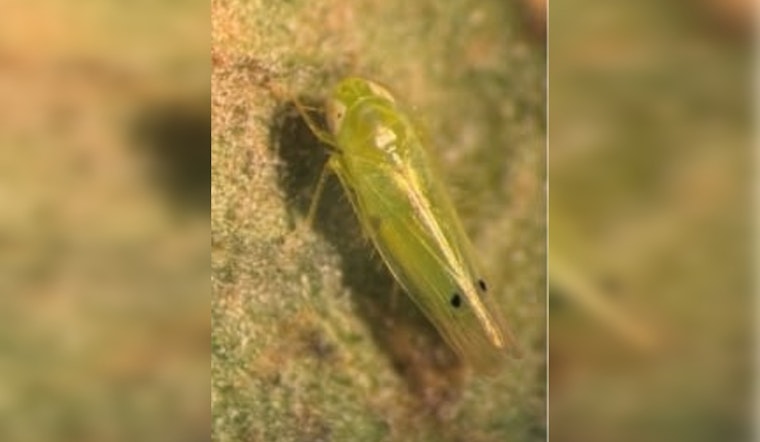
Oklahoma cotton growers are being told not to wait for trouble to show up. OSU Extension is urging producers to start aggressive scouting this spring for the cotton jassid, a tiny invasive leafhopper that has already chewed through fields across the Southeast. The insect, also known as the two-spot cotton leafhopper, triggers rapid "hopperburn," a run of yellowing, reddening and drying that can leave plants unsalvageable within days. The pest had not been detected in Oklahoma as of late March, but Extension specialists say its fast spread in 2025 makes early detection critical.
In a pest e-alert, OSU Extension laid out a scouting protocol and a low treatment threshold, roughly one cotton jassid per leaf. The alert warns that "Once reddening starts on the leaf margins, it is likely too late to rescue the cotton plant." Authors Ashleigh Faris, Maxwell Smith and Jenny Dudak advise growers to check the fourth mainstem leaf below the terminal and to sample at least 25 leaves per field. They also ask producers to report suspected activity so the OSU Cotton IPM team can confirm identifications.
How far it has spread
The jassid moved quickly across the southern Cotton Belt in 2025, showing up on commercial cotton in multiple states and prompting urgent monitoring efforts. A peer-reviewed report in Insects documented detections across the Southeast, and a pest alert from FDACS first flagged the species in U.S. ornamental and cotton networks in late 2024. That rapid expansion has pushed some states to quarantine nursery hibiscus and coordinate regional scouting networks.
Scouting and control
Early action matters. Industry and university trials show some chemistries can provide strong knockdown, but resistance is a real possibility, so rotating products is key. Guidance from SEPRO and trial summaries list effective options for contact and residual control and recommend rotation programs for both preventive and curative treatments. Extension and industry partners stress that repeated applications may be needed under high pressure and that cultural measures, such as adjusting planting dates and maintaining balanced nutrition, can lower risk.
Oklahoma growers on alert
Local specialists are planning around careful scouting and fast response rather than betting the pest will skip Oklahoma. Maxwell Smith, OSU's cotton extension specialist, told the Oklahoma Farm Report that the jassid "hasn't reached Oklahoma yet" but cautioned, "If we see it, we need to get on it quickly before it does hurt our crops at all." Growers say they are folding jassid checks into routine field walks this spring.
What growers should do now
For now, the playbook is straightforward and urgent. Start edge-focused scouting, look on the undersides of leaves for small green nymphs, and watch for upward leaf curling or margin yellowing that can progress to hopperburn. If you suspect cotton jassid activity or see hopperburn symptoms, report it for confirmation. OKC Fox notes OSU is asking producers to contact the OSU Cotton IPM team immediately. Growers are also urged to keep an eye on local extension feeds and university cotton networks for updated thresholds and control recommendations as the season unfolds.





