

























































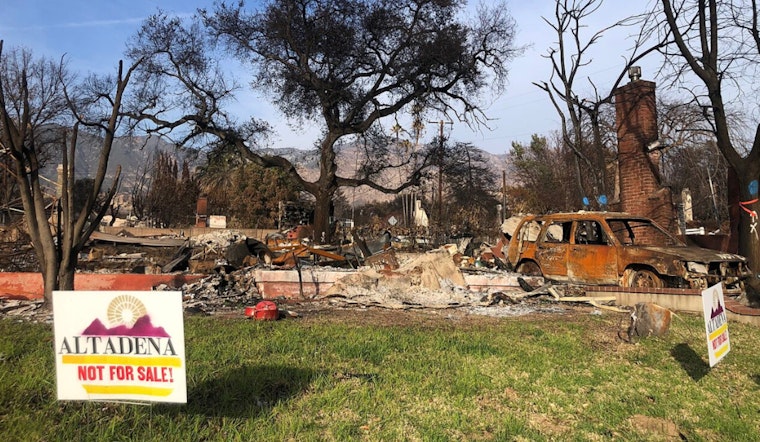
In the charred hills of Altadena and the bluffs of Pacific Palisades, the next phase of January’s destructive fires is playing out at the closing table. Investors are snapping up burned parcels, and the buying spree has ignited a fight over who gets to rebuild. Longtime residents, many underinsured and still stuck in limbo waiting for insurance checks or permits, say they are being nudged to sell to cash buyers who can move far faster than families trying to come back. Lawmakers and local organizers warn that the trend could permanently push out the people who lived in these neighborhoods for generations.
Schiff's Six-Month Investor Freeze
Sen. Adam Schiff has circulated a discussion draft that would tack a new prohibition onto the Robert T. Stafford Disaster Relief and Emergency Assistance Act, blocking “institutional investors” from making offers on any property in a declared disaster area for six months after the declaration. The draft defines an institutional investor as an entity that owns at least 75 single-family homes and would bar offers “through the mail or any interstate wire” and other solicitations during that six-month window, according to Sen. Adam Schiff’s office.
Investors Are Already Moving In
A Redfin analysis found investors accounted for roughly 40% of vacant-lot sales in the fire-damaged ZIP codes during the third quarter of 2025, with about 48 of 119 lots in Pacific Palisades, 27 of 61 in Altadena and 19 of 43 in Malibu going to investor buyers. The figures show heavy demand from well-capitalized buyers at the very moment many homeowners are still sorting out whether they can afford to rebuild and how to handle rising insurance premiums, according to Redfin.
Neighborhood Backlash And Street-Level Organizing
In Altadena, a grassroots group called Altadena Not For Sale has been tracking investor purchases and reports that roughly 60% of parcel sales in the Eaton fire zone went to investors. That number has helped fuel protests and a forest of “not for sale” yard signs. Organizers and advocates say the sales risk swapping long-term residents for corporate owners and short-term rentals. “Six months is not enough of a breather,” organizer Melissa Michelson told reporters, and Lisa Odgie of the Eaton Fire Collaborative added, “That is not recovery. That is displacement dressed up as a real estate transaction,” as reported by the Los Angeles Times.
Why The Draft Leaves Existing Deals Intact
Schiff’s proposal is aimed at the next disaster, not the last one. Its limits would apply only during the six months after a future disaster declaration, so it would not touch investor purchases that have already closed since the January 2025 fires. The draft adds a solicitation ban into the Stafford Act but does not specify criminal penalties in the text, leaving questions about how it would actually be enforced to lawmakers and agencies, according to Sen. Adam Schiff’s office.
State Lawmakers Target Tax Perks
At the state Capitol, Assemblymember Matt Haney has introduced AB 1611 to rein in a tax maneuver he says helps big landlords outbid regular families. The bill would bar companies that own 50 or more single-family homes from using like-kind (1031) exchanges to defer California taxes. Haney’s office says the change is meant to cut back the incentive that lets large owners roll their gains into more properties and undercut local buyers, according to a press release from Assemblymember Matt Haney's office.
Local Countermoves: Land Trusts And Temporary Pauses
On the ground, organizers are racing to keep land in community hands through tools like community land trusts, land-banking and proposed local acquisition funds. These models have been used after disasters from Lahaina to the Methow Valley, but they require fast, flexible capital to go toe-to-toe with all-cash buyers. High Country News has examined how post-disaster land trusts help keep property with local residents, and recovery groups such as the Eaton Fire Collaborative are coordinating relief and long-term rebuilding efforts in Altadena, according to High Country News and the Eaton Fire Collaborative.
For now, Altadena and the Palisades are staring down a blunt, immediate question: who will actually have the money and the stamina to rebuild on all those scorched lots. Lawmakers in Washington and Sacramento have opened parallel paths with a federal discussion draft and new state legislation, but community leaders warn the clock is already ticking for residents who lost their homes in January.





