

























































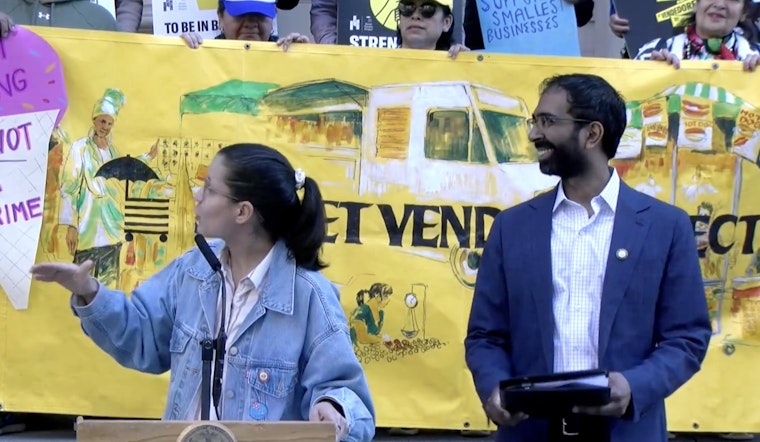
City Hall was packed on Monday as Council members, street vendors and advocates gathered to celebrate a hard-fought package of laws meant to reshape street vending across the five boroughs. The measures promise to expand access to permits, create a new city office to help vendors navigate licensing and compliance, and shift enforcement away from criminal penalties that critics say have long fallen hardest on low‑income and immigrant sellers. Supporters cast the vote as a long‑overdue fix for vendors who have spent years stuck on waiting lists.
🔴 LIVE: Celebrating Legislation Protecting Street Vendors with @CMShekarK, @SpeakerMenin, Street Vendors and Advocates. https://x.com/i/status/2031043916234166639
What the Laws Change
The City Council’s package expands licensing and establishes a Division of Street Vendor Assistance to help vendors apply for permits, access training and comply with rules, according to the New York City Council. Introduction 431‑B makes thousands of additional mobile‑food and general vendor license applications available between 2026 and 2031 and creates 10,500 new general vending licenses in 2027, while companion bills, including Intro. 1251, aim to ensure agencies actually issue licenses up to the authorized caps. Supporters say these moves are designed to clear the backlog that has left tens of thousands of sellers operating without permits.
Decriminalization and Enforcement
One central change reclassifies many vending offenses as civil violations rather than misdemeanors, eliminating the jail sentences that could accompany some unlicensed vending charges, as reported by NY1. Under the new framework, certain infractions will be handled with administrative fines and corrective measures instead of criminal prosecution. Advocates say that shift will reduce the collateral harms of a misdemeanor conviction, including housing and employment barriers and immigration exposure. City officials and vendor groups say enforcement is expected to focus more on training and compliance than on arrests.
How Vendors Reacted
Vendors and organizing groups turned out to mark the Council’s vote and its promise of a real pathway to legal operations, per reporting by amNewYork. Organizers, including the Street Vendor Project, framed the bills as the result of years of community advocacy balanced with input from brick‑and‑mortar businesses, and vendors said the changes could ease day‑to‑day confrontations with enforcement. At the same time, many warned that the benefits will depend on how quickly agencies open application windows and how consistently the new rules are applied across neighborhoods.
Legal Implications
The Public Advocate’s office highlighted that overriding a last‑minute mayoral veto cleared the way for these protections and said the reforms will help vendors avoid criminal records and connect to city services, according to a statement from the Office of the Public Advocate. By shifting enforcement into a civil, administrative regime, the laws reduce the likelihood that a single vending citation becomes a life‑altering criminal conviction. Legal observers caution that the ultimate impact will depend on rule‑writing, inspections, fine schedules and the city’s capacity to deliver training and dispute resolution.
Next Steps for Vendors and the City
The Council says agencies will begin rolling out licensing windows and setting up the new Division of Street Vendor Assistance to provide outreach and training, according to the New York City Council. Vendors are being urged to monitor the Department of Health, the Department of Consumer and Worker Protection and the Department of Small Business Services for announcements about applications and technical assistance. Hoodline previously reported on the long waitlists and neighborhood debates that pushed this package forward, underscoring why organizers called the vote a turning point for many sellers.



