

























































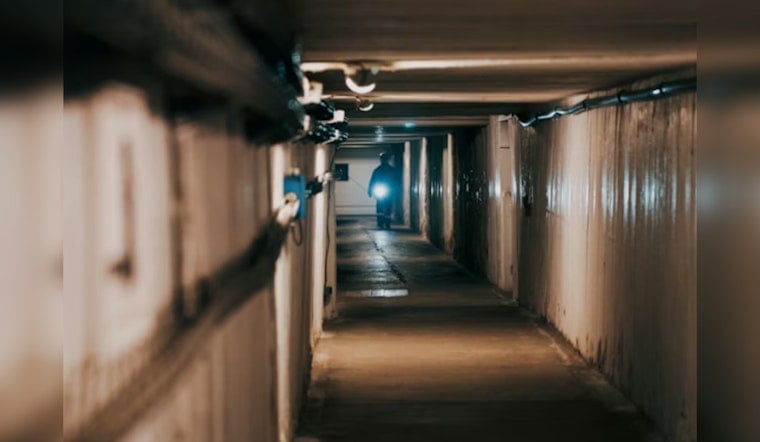
A clandestine homeless camp tucked inside a Canoga Park storm drain tunnel was cleared this week, revealing carved sleeping alcoves and mounds of trash and human waste. Crews sealed a sidewalk access point after the sweep, and outreach workers helped move several people into temporary rooms, according to officials. The operation highlighted the risks of hidden riverbed encampments as Los Angeles tries to juggle sanitation crackdowns with ongoing housing efforts.
According to the New York Post, the tunnel was accessed through a manhole on a sidewalk near the Los Angeles River and Bassett Street, where rangers with the Mountains Recreation and Conservation Authority joined city crews in removing the occupants. The Post reported that video and photos from inside showed makeshift sleeping areas cut directly into the concrete, along with piles of debris, trash, and human waste. Afterward, workers sealed the entrance to prevent people from reentering, and some of those moved out were transported to temporary housing.
Where this fits in L.A.'s cleanup strategy
Los Angeles has stepped up encampment clearances under city initiatives and a court settlement that set numerical targets for removing large encampments. A federal judge has emphasized that these removals should come with offers of shelter and housing, a requirement that has influenced how the city counts and carries out cleanups, according to the Los Angeles Times.
State funding and hotel conversions
The state’s Homekey program has bankrolled the conversion of hotels and motels into housing and, when combined with earlier funding rounds, has provided roughly $1.3 billion for Homekey projects, according to the Governor’s office. Local governments have also put public money toward buying and renovating motels and other properties for interim housing, a move that has sped up placements but stirred debate over long-term costs and how consistently those units stay occupied. Officials say those trade-offs are part of why they continue to rely on a mix of outreach, housing offers, and targeted clearings like the Canoga Park tunnel sweep.
Officials and outreach
Officials told the New York Post that many people removed from hidden locations, such as drains, decline services, and sometimes circle back to abandoned tunnels, making it harder to secure lasting exits from street homelessness. The Post also pointed to a recent similar operation in South Los Angeles near West 88th Street and South Grand Avenue, underscoring that these underground camps are cropping up beyond a single neighborhood. Outreach workers say closing off dangerous access points while offering housing options are both necessary to keep people from returning.
Why drains are dangerous
Storm drains and river underpasses are considered especially hazardous because they can flood quickly, are difficult for first responders to navigate, and tend to accumulate dangerous debris and waste. The city’s Inside Safe outreach teams have specifically targeted stretches of the Los Angeles River for that reason, coordinating with service providers and rangers from the Mountains Recreation and Conservation Authority to move people indoors ahead of storms, according to a district press release. Officials say that pairing safety measures with outreach is central to their rationale for removing people from storm drain systems.
For now, the blocked tunnel access and continuing outreach are meant to cut immediate risks while the city works to secure more stable housing for people displaced by clearings. The broader fight over sweeps, shelter offers, and whether removals actually lead to durable housing outcomes is likely to continue as the city pushes to meet court-ordered targets and residents press for long-term fixes, the Los Angeles Times reports.





