

























































A vast stash of low-salinity water is quietly sitting beneath the Atlantic seafloor off the U.S. Northeast, and scientists say it could be big enough to keep a city the size of New York supplied for centuries. An international research team drilled far offshore and pulled up sediment cores loaded with pore water that, in some spots, tested close to common drinking-water standards. The discovery immediately raises thorny questions about how you would even reach such a resource, what it might do to the marine environment, and who, if anyone, could legally claim the water.
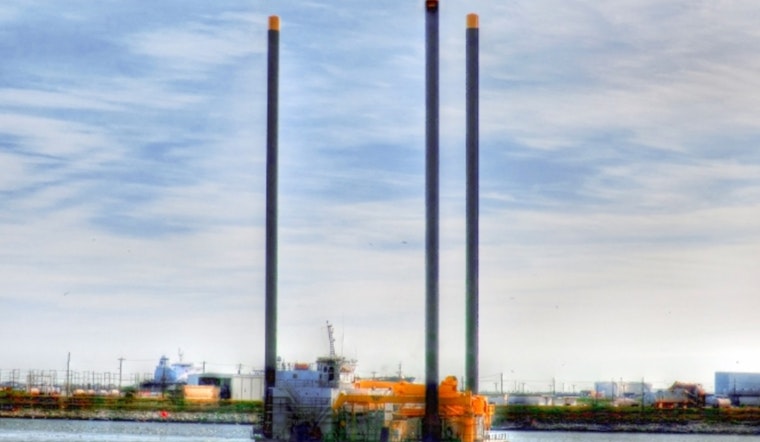
During IODP³-NSF Expedition 501 the science party recovered sediment cores and ran groundwater pumping tests that yielded nearly 50,000 liters of pore water from several drill holes. Those samples documented freshened groundwater in a roughly 200-metre-thick zone beneath the continental shelf, according to IODP. After the shipboard work wrapped up, an onshore science team began an intensive phase of splitting and analysing the cores at the Bremen Core Repository.
Where the water sits and how old it might be
Expedition 501 drilled at sites south of Nantucket and Martha’s Vineyard, reaching layers roughly 1,300 feet (about 400 metres) below the seafloor. Along the sampled transect, salinity measurements dropped from levels near typical drinking-water values to several parts per thousand farther offshore. Early radiocarbon, noble-gas and isotope results suggest the groundwater was emplaced during the last glacial period, possibly on the order of 20,000 years ago, according to preliminary findings reported by Live Science.
Freshness, volume and what that actually means
The expedition’s scientists report that some of the buried groundwaters are “remarkably dilute,” with salinities around or even below 1 practical salinity unit (≈1,000 mg/L). They note that this is comparable to common drinking-water thresholds. Those low readings, combined with the pumped samples, are giving researchers the raw data they need to refine volume estimates and to test whether the offshore water is largely ancient and sealed off or partly connected to onshore aquifers and modern recharge.
Could it supply New York?
Coverage of the expedition has highlighted an early back-of-the-envelope estimate that the offshore system could theoretically hold enough water to supply a metropolis the size of New York City for roughly 800 years. That number has traveled quickly, but scientists involved in the work are quick to stress that it is provisional. The true picture depends on how far the freshened system actually extends, how connected it is to onshore sources, and whether the water behaves as a renewable resource, as noted by AP News.
Why experts say it is not a quick fix
Even if the volumes ultimately prove to be huge, experts caution that tapping subseafloor groundwater would be anything but easy. Extracting water from beneath the ocean floor would be technically demanding, expensive and energy intensive. Scientists on the cruise described the pump tests themselves as challenging and said that conventional groundwater techniques on land do not translate neatly to a marine setting. Commentators have also flagged potential ecological risks from large-scale pumping and raised unresolved legal and permitting questions, according to ECORD.
Next steps for the science
The cores and pore-water samples are now being scrutinised across the science team and will be archived under IODP moratorium and data-release rules. Researchers say more definitive age estimates, refined volume calculations and detailed geochemical profiles will follow as radiocarbon and noble-gas analyses are completed. For now, they emphasise that the main outcome is scientific. Understanding how offshore freshened groundwater forms and behaves will be crucial before any serious discussion can begin about using, protecting or regulating this hidden reservoir, according to teams working at MARUM and with the IODP onshore party.





