

























































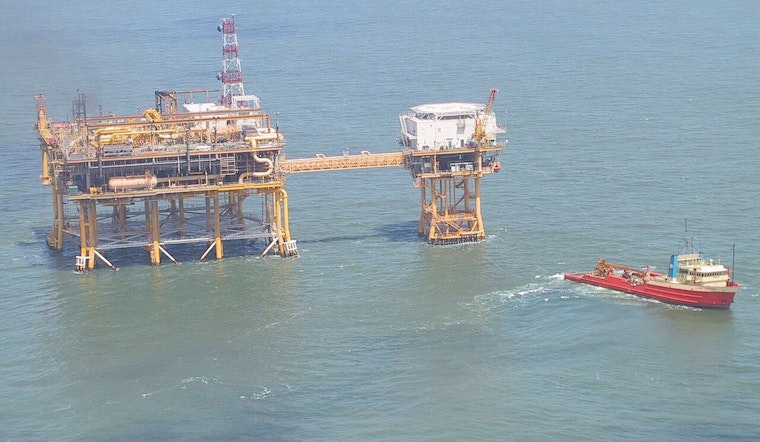
Out in the Gulf off Port Fourchon, the timing could hardly be worse. A major cleanup is underway after crude oil was spotted near the Louisiana Offshore Oil Port, just as brown shrimp are in the middle of their critical spring spawn. Their larvae float right at the sea surface, the same thin layer where oil sheens linger and where wind and waves can push the slick into bays and estuaries. For coastal fishermen banking on a strong spring recruitment, those fragile larvae are the line between a solid season and one that falls flat.
As of March 7, Unified Command officials report that an estimated 31,500 gallons, about 750 barrels, of crude were discharged and roughly 27,888 gallons have been recovered. The response has brought in about 464 responders and 60 vessels and stretched out some 28,300 feet of protective and collection boom. Seventeen birds have been documented as affected, and the source of the spill has been secured, according to the U.S. Coast Guard.
According to LOOP and company officials, crews first spotted a sheen on February 26 at a platform roughly 18 miles off Port Fourchon and then isolated and shut down the affected section, reporting detailed by New Orleans CityBusiness. Gov. Jeff Landry has said the release stemmed from a failure in a cargo-transfer hose, a point reported in local coverage by WBRZ.
Shrimp Season on the Line
Along Lafourche and Terrebonne parishes, shrimpers say the calendar may hurt more than the headline numbers. Brown shrimp are laying eggs now, and their larvae drift up to the surface where any oil sheen will spread out, then get shoved landward by wind-driven waves into inshore waters. “My grandfather used to call it ‘Les vents de Carême,’” David Chauvin told reporters, adding, “that larva, there isn’t a doubt in my mind, is coming in in waves,” in an interview republished by New Orleans CityBusiness. The Louisiana Department of Wildlife and Fisheries says it will run shrimp trawl sampling in affected basins as it tracks conditions heading into the spring inshore season.
Response and What Comes Next
A Unified Command made up of the U.S. Coast Guard, the Louisiana Oil Spill Coordinator’s Office and LOOP was set up on February 27 to coordinate cleanup and environmental monitoring. Officials say contracted crews are on the water assisting recovery efforts, and mariners are being urged to steer clear of the affected area and to report any shoreline or wildlife impacts to 1-855-566-7552, according to the U.S. Coast Guard.
If testing detects contamination, reopening fisheries will follow federal playbooks that require sensory, or organoleptic, checks first and then chemical analysis before harvest areas are cleared for the market again, per NOAA/FDA. Shrimpers say they plan to keep a close eye on trawl results and shoreline surveys before deciding how, and whether, to fish and sell this spring.





