

























































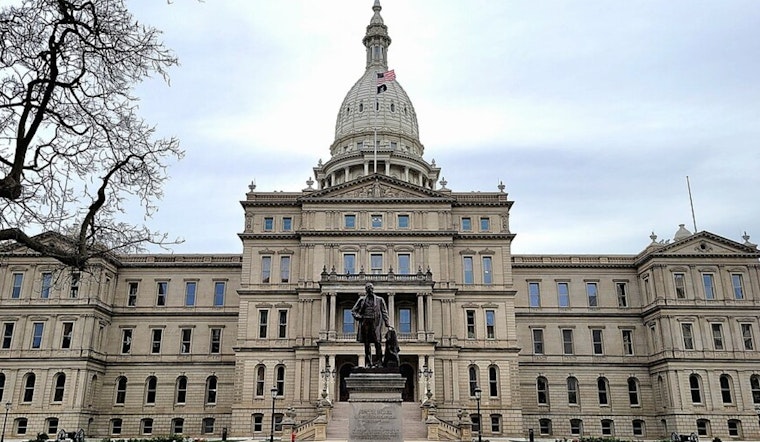
A conservative-backed push to tighten Michigan voting rules just crashed into Lansing with a truckload of paper. Organizers of a "citizen-only" ballot campaign say they turned in more than 750,000 petition signatures to state election officials on Wednesday, a total they claim easily clears the roughly 446,198 valid signatures needed to send a constitutional amendment to voters.
The proposal would write new voter ID and citizenship requirements into the state constitution. Registrants would have to prove they are U.S. citizens to get on the rolls, and voters would be required to show photo ID at the polls or provide documentation shortly after casting a ballot for their vote to count. Campaign officials delivered the petitions in Lansing and urged state staff to start combing through the piles of paperwork immediately.
As outlined by Votebeat, the Americans for Citizen Voting proposal would require the Secretary of State to verify citizenship for all registered voters, mandate documents such as passports or birth certificates for new registrations, and eliminate the current affidavit alternative for voters who show up without photo ID. It would also allow election officials to withhold counting ballots from voters whose citizenship cannot be verified unless they provide documents within six days after the election. The summary language contemplates separate lists for voters who have proven citizenship and criminal penalties for violations.
Supporters at the Capitol
Backers of the measure gathered for a news conference in Lansing, casting the oversized stack of signatures as evidence that Michigan voters are hungry for stricter rules at the ballot box. Paul Jacob, chair of Americans for Citizen Voting, told reporters the campaign "pored over" the petition sheets and is confident in their accuracy, and he pressed state staff to move quickly to count and verify the filings, as reported by WGVU.
Opponents Warn of Disenfranchisement
Civil rights and voting access advocates are sounding alarms about who could get left out if the amendment makes the ballot and passes. They argue the proposal would erect new barriers for eligible voters who lack easy access to documents such as birth certificates or passports and could create headaches for people who move frequently, live in poverty or are older and never needed those records before.
The ACLU of Michigan has urged residents to "decline to sign" initiatives it says would undermine ballot access and make it harder for some communities to vote, according to the ACLU of Michigan. At the petition drop-off, advocates also warned that the proposed verification rules could lead to expensive and confusing voter roll reviews across the state, per reporting by The Midwesterner.
What Happens Next
Under state rules, backers of a constitutional amendment must collect at least 446,198 valid signatures to secure a spot on the ballot, according to the Michigan Bureau of Elections. For the 2026 election cycle, petition forms must be filed by July 6, 2026, per the League of Women Voters of Michigan's ballot schedule.
With the signatures now in, the Michigan Department of State will review the submitted sheets and flag any potential problems before the Board of State Canvassers rules on whether the campaign has met the threshold. The department has indicated that staff are prioritizing candidate filings first, which could slow the timeline for a formal decision on the petition, as reported by WGVU.
Legal Implications
The summary language approved by state canvassers would authorize officials to remove registrations they cannot verify and would require voters whose status is questioned to supply documentation within six days after an election. It also proposes penalties of up to $1,000 in fines and as much as five years in prison for certain violations, according to Votebeat.
Supporters say the amendment builds in a state-funded hardship program to help residents obtain the required documents so that legitimate voters are not turned away. Critics counter that the combination of document demands, potential voter purges and stiff penalties could be used to scare or challenge eligible voters whose paperwork is not in perfect order.
For now, the massive petition drop pushes the fight over voter ID and citizenship checks squarely into the center of Michigan politics as the 2026 campaign season ramps up. Legal challenges, administrative reviews and a prolonged public messaging war all seem likely before voters are asked to make the final call. Organizers say they plan to shift into outreach and education mode while state officials work through the canvass process.





