

























































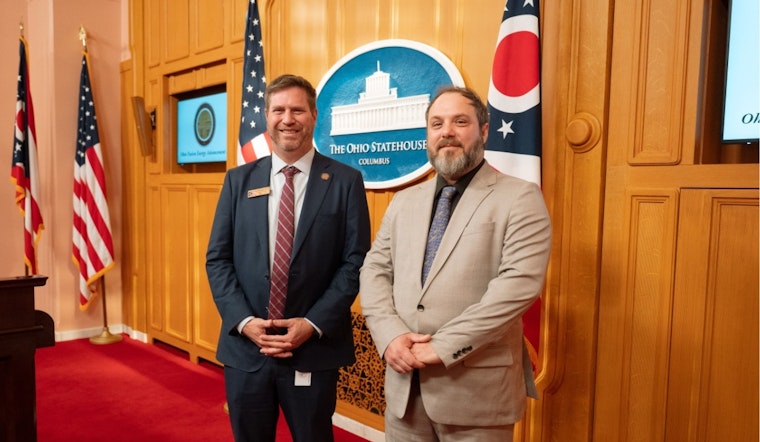
Ohio is trying to cut to the front of the line in the race for fusion energy. Last Thursday, state Rep. Brian Lorenz rolled out the Ohio Fusion Energy Advancement Act, a proposal that would formally define fusion in state law and set up a working group to figure out how to regulate and recruit fusion companies. The move lands just as private fusion developers are racing toward commercial demonstration projects and sketching out early plant proposals.
What The Bill Would Do
Lorenz’s draft would update Ohio law to recognize fusion energy, create an 11-member Ohio Fusion Energy Working Group and review whether existing tax incentives and workforce programs could apply to fusion companies, according to the sponsor’s press release. The group would be charged with spotting regulatory gaps, assessing supply-chain and training needs, and reporting each year to the General Assembly before a scheduled review of the program.
The sponsor is pitching the measure as homework, not a handout. He says it is meant as preparation rather than a subsidy or mandate and that it would not relax safety standards. Those points are central to the sales job for the bill’s backers. For details, see the Ohio House.
Modeled After Washington’s Approach
Lorenz told reporters he modeled the bill on steps other states have taken to give regulators and developers clearer rules as fusion inches toward commercialization. The Statehouse News Bureau notes he stressed that the plan “doesn’t subsidize or mandate fusion” and would pull officials from public health, environmental protection and the National Guard into the working group.
Supporters say the aim is to give companies a predictable path for permits and workforce development, not to strong-arm local communities into hosting projects. In other words, get the rulebook written before anyone actually tries to build a plant.
Helion And The Race To 2028
Part of the urgency comes from the private sector’s aggressive timelines. Helion Energy has already started site work near Malaga in Chelan County, Washington, and says it is still on track to supply electricity under a power purchase agreement by 2028. National outlets have covered Helion’s site preparation and early permitting steps, helping push fusion from sci-fi territory into statehouse talking points.
Ohio lawmakers say they want the state ready if developers decide the Midwest is where they want to put pilot or commercial fusion plants. The subtext: if other states are clearing the runway, Ohio does not want to be stuck in the terminal.
How Much Power That Actually Is
Helion’s initial goal of roughly 50 megawatts of output after a ramp-up would not remake the entire grid, but it is far from a science-fair project. A 50 MW generator running around the clock would produce about 438,000 megawatt-hours a year. Using the U.S. Energy Information Administration’s estimate that the average American household bought about 10,791 kilowatt-hours in 2022, that works out to on the order of 40,000 homes.
Local coverage has boiled that down to a ballpark range of roughly 35,000 to 50,000 homes to give people a feel for the scale. For that context, see Cleveland.com.
Federal Rulemaking Is Moving, Too
Ohio would not be acting alone. The Nuclear Regulatory Commission has been developing a regulatory framework for fusion and carrying out statutory changes that treat many near-term fusion designs under a byproduct-materials approach instead of the traditional nuclear fission reactor licensing track.
The NRC’s vision and strategy for fusion lays out a risk-informed, performance-based path, with coordination across Agreement States to streamline licensing options while preserving safety. That federal work forms the backdrop for state-level planning and helps explain why legislators are arguing about preparation now. The NRC’s fusion vision page details the agency’s timeline and guiding principles.
What It Means For Ohio
The mix of private project timelines and federal rulemaking is the main rationale Lorenz has offered for the bill. The Statehouse News Bureau reports that Ohio State’s Nuclear Reactor Laboratory recently received federal grant money to study commercial fusion uses, and lawmakers argue the state should have tools lined up if real-world projects start to materialize.
For now, the measure is still waiting on formal introduction and a committee assignment. Even if it advances, any path to an actual fusion plant in Ohio would still need community engagement, access to transmission lines and methodical environmental and safety reviews. Those unglamorous steps will ultimately decide whether planning on paper translates into concrete and steel.
Bottom Line
Lorenz describes the bill as a planning exercise, and in his sponsor statement he argues that “fusion energy promises clean, reliable and abundant power.” The next chapter will be lawmakers, regulators and communities deciding whether to make room for a technology that is both ambitious and uncertain.
If companies hit their timelines and regulators are satisfied, the working group could give Ohio a clearer playbook for permits, workforce training and potential incentives. If the technology slips behind schedule, the bill would still leave the state with a framework ready for the next round of fusion conversations.




