

























































Published on May 01, 2026
Updated on May 02, 2026 at 7:01am
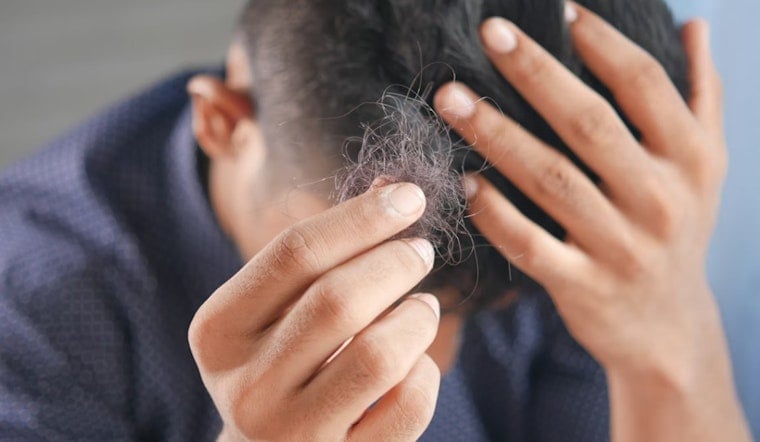
If you've been on Ozempic and lately noticing more hair in the shower drain than usual, a Bay Area doctor has some answers — and, more importantly, some reassurance. A new peer-reviewed study co-authored by a Vallejo-based dermatologist has confirmed what many GLP-1 users have been quietly wondering about: yes, weight loss drugs like Ozempic and Mounjaro are linked to hair loss, and yes, doctors are now paying serious attention to it.
The Study, the Doctor, and the Findings
The research was published in the journal Science Progress this spring, led by dermatologist Aditya K. Gupta of the University of Toronto, with Bay Area co-author Dr. Paradi Mirmirani, a volunteer associate professor at UCSF and practicing dermatologist at Kaiser Permanente in Vallejo. The systematic review combed through 133 studies and identified 24 that met rigorous inclusion standards, focusing specifically on hair loss linked to GLP-1 receptor agonist drugs — the class that includes semaglutide (Ozempic, Wegovy) and tirzepatide (Mounjaro, Zepbound).
The headline finding: semaglutide and tirzepatide showed the highest rates of hair loss among all GLP-1 drugs studied. As reported by SFGate, Mirmirani told the publication that the hair loss signal was "strongest" in patients using higher doses of GLP-1s to treat obesity or achieve rapid weight loss, and less common in patients on lower doses for managing Type 2 diabetes. Women, she noted, appeared disproportionately affected — likely because they tend to lose weight more readily on semaglutide and tirzepatide, and weight loss speed appears to be the key upstream driver of shedding.
The numbers behind the connection are striking. A 2025 meta-analysis that examined more than 84,000 participants across 34 studies found that people taking GLP-1 drugs were 3.4 times more likely to experience hair loss compared to those not on the medications, according to the published study. Even in the landmark Wegovy clinical trials, hair loss occurred in about 3% of patients on the drug versus 1% on placebo — and tirzepatide's highest doses showed hair loss in roughly 5.7% of participants.
What Kind of Hair Loss Are We Talking About?
The two most common types identified in the study are telogen effluvium — a temporary, stress-triggered hair thinning that spreads across the scalp — and androgenetic alopecia, the genetically-driven form of baldness. Telogen effluvium is particularly associated with tirzepatide, which tends to produce the most dramatic and rapid weight loss of any GLP-1 drug currently on the market. The condition typically begins a few months after the body's weight loss stress kicks in, not necessarily right after starting the drug — which can make the connection easy to overlook.
Importantly, the study's authors and Mirmirani herself are careful to point out that hair loss does not appear to be a direct pharmacological effect of the drug itself. Rather, the leading theory is that rapid, significant weight loss acts as a physiological stressor that pushes hair follicles prematurely into a resting phase, disrupting the growth cycle. Think of it less as "Ozempic is toxic to your hair" and more as "your body is redirecting resources during an intense transformation." The Cleveland Clinic has described GLP-1-associated hair loss as "Ozempic hair" — a now-recognized phenomenon that rhymes uncomfortably well with the already-established "Ozempic face."
Don't Panic — But Do Pay Attention
Mirmirani, who says she's personally observed the pattern in her own Kaiser Permanente patients in Vallejo, emphasizes that the condition is manageable and generally reversible. "Hair shedding can occur with some GLP‑1 medications, especially with rapid weight loss — but it is usually temporary, reversible, and manageable," she told SFGate. "With good counseling, steady weight loss, and attention to nutrition, most patients can continue therapy safely."
Her practical recommendations center on diet and pacing. Patients should avoid prolonged severe caloric restriction — one of the more common ways GLP-1 users accelerate weight loss beyond what their body can comfortably handle. A diet rich in protein, iron, and vitamins like B12 can help protect the hair growth cycle during treatment. For those already experiencing active shedding, Mirmirani recommends over-the-counter topical minoxidil to help stimulate regrowth, adding that "with these adjustments, shedding has often stabilized or improved" in her patients.
Why This Matters to Bay Area Patients Specifically
GLP-1 drugs have become something close to a cultural phenomenon in the Bay Area, fueled by celebrity endorsements, tech-worker biohacking culture, and a healthcare landscape where concierge medicine and weight-loss clinics have made the drugs more accessible than ever. By some estimates, as many as 15 million American adults have used GLP-1 medications within the past year, according to Jezebel. That's a large pool of people for whom this study carries direct relevance.
The study also flags an angle that doesn't get nearly enough attention in mainstream coverage of GLP-1 drugs: adolescents. Large Wegovy product trials found hair loss in 4% of treated adolescents versus 0% in placebo groups — a result the study's authors described as notable even if not yet statistically definitive. As GLP-1 prescriptions creep younger, that's a data point worth watching. The study's authors are clear that more prospective, randomized trials are needed to fully establish causality, identify which patients are most vulnerable, and understand the precise biological mechanisms at play.
For now, the takeaway from Mirmirani and her colleagues is practical rather than alarming: if you're on a GLP-1 drug and noticing hair thinning, bring it up with your doctor. It's likely temporary, it's manageable, and losing a little hair during a medically supervised weight loss journey is probably not a reason to stop treatment. It is, however, a reason to eat more protein, take your vitamins, and maybe go a little easier on the aggressive caloric cuts — advice that, honestly, tracks whether you're on Ozempic or not.





