

























































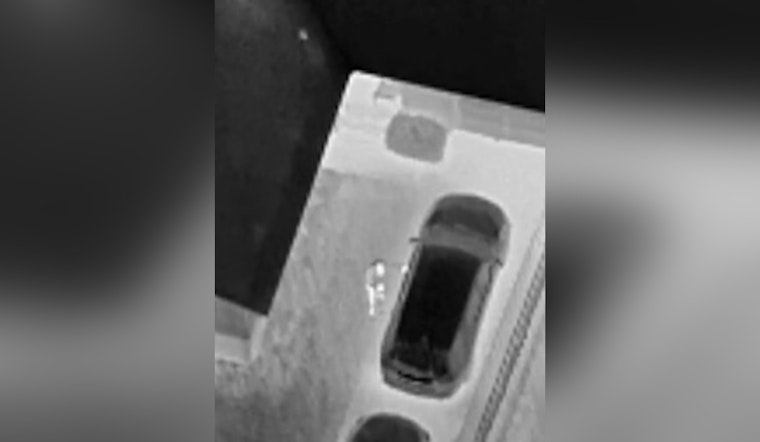
An Oklahoma City police drone helped officers track down a suspect with an active felony warrant after spotting him hiding in a residential driveway, according to the department. Officers were answering reports of someone checking vehicle door handles near SW 52nd Street and Shartel when staff in the Real Time Information Center launched a drone ahead of patrol units. The device picked up the individual on S. Dewey Avenue, and officers moved in to make the arrest on Feb. 22.
The department later laid out the play-by-play in a Facebook post titled "Eyes in the Sky: RTIC in Action," noting that the drone guided officers to a driveway where the suspect was hiding, that the person had an active felony warrant, and listing the incident under case number #26-12836, per the Oklahoma City Police Department. The post, published March 23, also notes that Santa Fe Division officers were investigating reports of someone trying vehicle door handles around SW 52nd and Shartel when the RTIC-launched drone helped them zero in on the suspect, who was then taken into custody.
How the RTIC and Drone Were Used
Oklahoma City's Real Time Information Center routes live video and other data to analysts who can send out drones as "eyes in the sky" so officers know what they are walking into before they arrive. The department's 2023 annual report says OKCPD has used drones to locate missing children, prevent auto burglaries and assist with suspect apprehensions, and it describes a Drone-as-First-Responder model that pushes aerial units into the field quickly, per the Oklahoma City Police Department annual report. Police say this setup can cut response times and reduce risks to both officers and residents.
Privacy And Oversight Questions
Advocacy groups have called for stronger rules and oversight as real-time crime centers and related surveillance tech spread across the country. The Electronic Frontier Foundation's Atlas of Surveillance tracks how quickly agencies have adopted these hubs, license-plate readers and drones, per the Electronic Frontier Foundation. At the same time, OKCPD's own documentation says RTIC resources "are deployed with respect for the individual rights of our residents as a priority," language the department uses to frame its use of live video and analytical tools. Civil liberties organizations say regular audits and clear, public-facing policies are key to maintaining trust when police knit together cameras, data systems and drones.
The Facebook post lists case number #26-12836 but does not share any additional identifying information about the person who was arrested, and the department has not released further details beyond that summary. For now, the incident stands as a fresh example of how Oklahoma City's RTIC and drone program are being folded into routine patrol work to locate suspects and support officer safety.


