

























































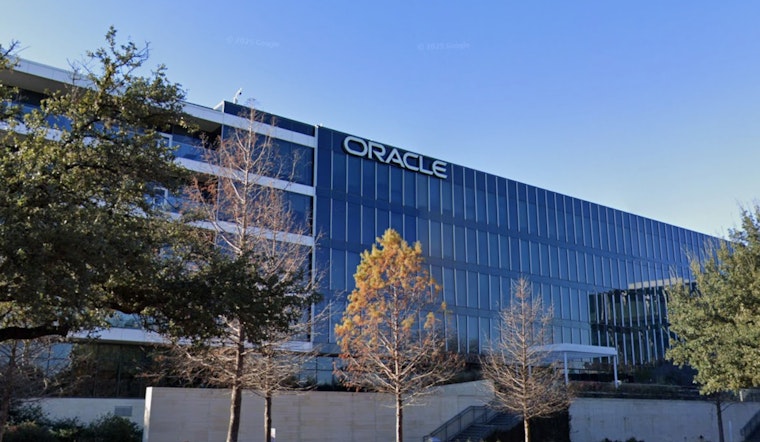
Oracle investors who jumped into ORCL stock during a six-month window last year are facing a key decision as an April 6 deadline approaches. A newly filed securities class action claims the Austin-based tech giant glossed over the true near-term costs and risks of its aggressive AI data-center expansion, only for late-2025 revelations about massive lease obligations and a funding pullback to wipe out billions in market value.
Case and deadline
The suit, Barrows v. Oracle Corporation, was filed Feb. 3 in U.S. District Court for the District of Delaware and is listed as pending before Judge Jennifer L. Hall, according to PR Newswire. The proposed class covers investors who bought ORCL between June 12 and Dec. 16, 2025, and anyone in that window may, no later than April 6, 2026, move the court to be appointed lead plaintiff. The law firm behind the case is urging affected shareholders to contact it for a free case review and lays out how the lead-plaintiff process works.
What the suit alleges
Plaintiffs say Oracle repeatedly hyped AI contracts and data-center capacity while soft-pedaling how long, and how expensive, the buildout would actually be. The complaint alleges the company told investors that AI spending would “just start generating revenue” quickly and that its “substantially increased spending created serious risks to the company's debt, credit rating, free cash flow, and ability to fund projects,” according to Kehoe Law Firm. The filing points to a series of downgrades and market moves last year as fallout from what investors now say were misleading assurances.
What Oracle disclosed
The case leans heavily on an Oracle quarterly filing that caught Wall Street off guard. In that report, the company disclosed $248 billion of additional lease commitments, largely tied to data centers and cloud capacity, that were not listed on its balance sheet as of Nov. 30, 2025. The disclosure appears in Oracle's Form 10-Q on file with the SEC and is cited in the lawsuit as a central fact supporting the claims. Plaintiffs argue the size and timing of those commitments help explain why Oracle raised its capital-expenditure forecasts without showing matching near-term revenue growth.
Market fallout and funding concerns
The complaint highlights a Sept. 24, 2025 S&P Global warning and a run of analyst downgrades that came before sharp drops in Oracle's share price, and it flags a Dec. 17 report that a key financier pulled back from a $10 billion Oracle data-center project. Those episodes, along with quarterly results showing heavy capital spending and negative free cash flow, are cited as the proximate causes of the losses investors now claim, according to Kehoe Law Firm. The complaint ties the market reaction and funding jitters directly to Oracle's AI infrastructure push.
What investors should do
Shareholders who bought ORCL during the June-to-December period generally have three choices: seek appointment as lead plaintiff by April 6, hire their own counsel and participate more actively, or sit back and remain an absent class member. The law firm that filed the case has released an announcement that walks through the steps and contact details for those considering a lead-plaintiff role and emphasizes that there is no cost to speak with the firm, according to PR Newswire. Institutional investors often pursue lead status because it lets them steer litigation strategy and select lead counsel, which can influence how fast the case moves and how broad discovery becomes.
Legal implications
The complaint asserts claims under Section 10(b) of the Securities Exchange Act and SEC Rule 10b-5, along with control-person liability under Section 20(a). Private securities-fraud plaintiffs must plausibly allege a material misstatement or omission, scienter, a connection to a securities purchase or sale, reliance, economic loss, and loss causation, a framework the U.S. Supreme Court has outlined in cases discussed by Cornell Law School. If the court appoints a lead plaintiff, that investor will be responsible for directing the litigation and choosing the lawyers who represent the class.
We will be tracking future filings and court dates as the case moves through federal court in Delaware. Affected Oracle shareholders should circle April 6, 2026, as the deadline to seek lead-plaintiff status and consider talking with counsel about which path makes the most sense for them.





