

























































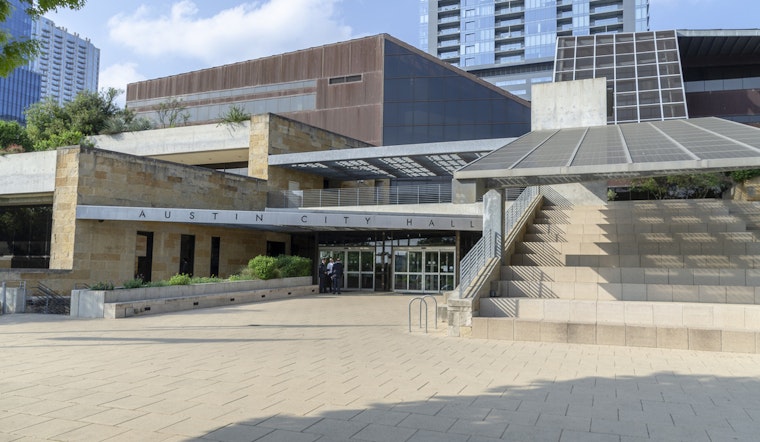
Austin is gearing up for a lean half decade after city staff laid out a five-year financial forecast for the City Council on Tuesday that assumes the "No-New-Revenue" maintenance and operations property tax rate. Mayor Kirk Watson asked staff to build the numbers around that rate as the starting point for budget talks, effectively testing how far the city can stretch existing tax dollars. The briefing officially kicks off the FY2026–30 budget process and sets expectations for what services can be maintained without bringing in more property tax revenue.
What's in the forecast
The forecast maps out projected revenue and spending through FY2030 and sketches the future size and makeup of the General Fund. According to the City of Austin, the amended FY2025-26 General Fund comes in at roughly $1.5 billion. Of that, property taxes are expected to bring in around $713.3 million, sales taxes about $359.4 million, and transfers from city utilities about $193.8 million. The report sets those totals against slower revenue growth and familiar cost pressures like employee wages, benefits, and ongoing service demands that rarely move in a downward direction.
How the money is split
Both the forecast and the FY2025-26 approved budget show core public safety and basic services eating up most of the General Fund, which is not exactly a shock for a fast-growing city. The city's FY2025-26 City of Austin budget puts police spending at roughly $525.4 million, fire at about $269.1 million, emergency medical services near $151.1 million, and parks and recreation around $135.8 million in the amended budget. With that kind of baseline, running the numbers at a zero-growth tax rate does not leave much space for new initiatives without either trimming something else or eventually seeking more revenue.
Why the no-new-revenue baseline matters
Using the No-New-Revenue M&O rate as the forecast baseline is a way to show, in clear numbers, what a status-quo tax policy would buy the city over five years. Council committees had already been talking about including that scenario, according to the City of Austin agenda from the Audit & Finance Committee, which was sponsored by Mayor Watson. Framing the debate this way forces Council to confront some basic tradeoffs: keep existing services mostly intact, hunt for new revenue, or cut programs if they want to stick with the no-new-revenue rate over the long haul.
What's next and why residents should pay attention
In the weeks ahead, staff will refine their assumptions and roll out a proposed budget with specific recommendations and potential amendments before Council enters its formal adoption process this summer and moves toward a final vote in August, as outlined by the City of Austin Budget Office. Mayor Kirk Watson has repeated in a post on X that starting with the No-New-Revenue M&O rate is step one in that process. For residents who care about police and fire staffing, how often the grass gets cut at neighborhood parks, or how stable their utility rates stay, the upcoming budget hearings and the city's online budget dashboard will be the main places to see how this no-new-revenue experiment plays out.



