

























































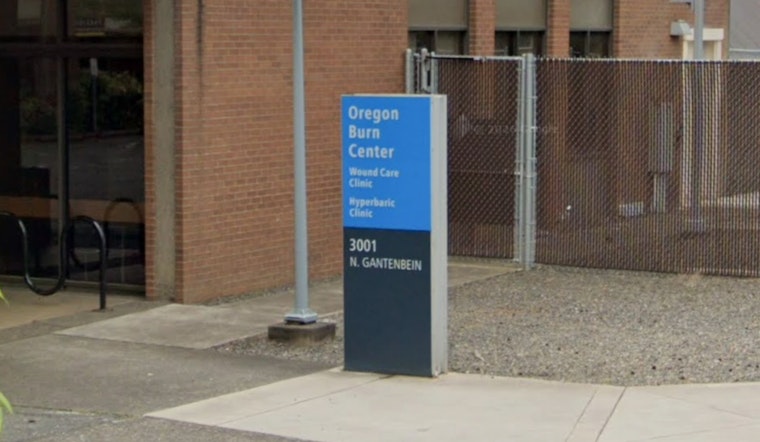
Portland burn surgeons are sounding the alarm over a brutal side effect of the region's shift toward smoked fentanyl: a spike in life-threatening burns that can go all the way down to muscle and bone. At the Oregon Burn Center, clinicians say they are treating patients who need repeated reconstructive surgeries, sometimes amputations, and at least one person recently died after falling asleep while smoking. The pattern has pushed doctors and public health researchers to ask whether inexpensive butane torches are creating a particularly dangerous path to permanent injury for people who smoke illicit drugs.
A mixed-methods paper in JAMA Internal Medicine looked at Oregon Medicaid claims from April 2016 through March 2024 and found that more than half of people treated for burns in hospital settings had used smokable drugs other than tobacco. Local reporting from OPB includes surgeons and study authors describing several catastrophic recent cases, including a patient who died after catching fire while smoking fentanyl.
How Butane Torches Raise Burn Risk
Researchers and burn surgeons say the danger often traces back to butane torches, handheld devices that produce a very hot, focused flame and often come with a lock that keeps the flame burning without pressure on the trigger. Dr. Honora Englander, the study's lead author and director of the in-hospital addiction care team at OHSU, told OHSU News that the "softer flame" of a common lighter is a safer choice than a torch, especially when people are using sedating drugs such as fentanyl.
People interviewed for the study said they turn to torches because they vaporize drugs efficiently and keep working in the wind. Many also admitted using the lock while smoking, a small convenience that can become disastrous if someone nods off and leaves a live flame pressed against clothing, bedding or skin.
What The Numbers Show
The JAMA analysis paired Oregon Medicaid claims with interviews and found that people who smoke opioids or stimulants had burn treatment rates roughly four times higher than people who do not smoke illicit drugs, according to JAMA Internal Medicine. The mixed-methods approach, which combined state insurance data with interviews of 19 people who smoke substances, is described as the first effort to quantify burn risk tied to smokable drug use in an era when butane torches are widely available.
Harm-Reduction Tradeoffs
The shift from injecting to smoking does carry public health benefits, but it also creates a new set of hazards that are getting harder to ignore. The CDC has documented a national trend in which smoking surpassed injection as the most commonly documented route of drug use in overdose deaths by 2022, a change that makes Oregon's findings relevant far beyond Portland.
As STAT reports, physician-anthropologist George Karandinos argued that the Oregon study "should become a part of harm reduction practice," effectively suggesting that burn prevention now belongs in the same conversation as naloxone, clean syringes and safer smoking supplies.
What Clinicians And Outreach Workers Are Saying
Front line clinicians and outreach workers told researchers that butane torches are popular because they provide what users describe as a cleaner hit and keep working in windy conditions. The problem, they say, is the lock. If someone slumps over while high, that continuous flame can turn a lap, a blanket or a sleeve into a blowtorch.
Surgeons at Legacy Emanuel report seeing deep, highly localized burns that extend into muscle and bone, injuries that sometimes require amputation, according to reporting by OPB. "They're passing out with that butane lighter on their legs, in their lap, in their hands," burn surgeon Dr. Mark Thomas said, describing how the locking mechanism can leave a flame burning unattended.
The study's authors and Oregon clinicians say more research is needed to explain some odd patterns in the data, including why the overall rate of burn hospitalizations did not spike in step with the rise in smoked fentanyl. They also argue that harm reduction programs should add basic burn safety advice to their toolkits, without losing sight of the broader overdose crisis.
The research was supported by the National Institute on Drug Abuse, and OHSU says clinicians in Portland will begin counseling patients about safer smoking practices and the specific risks posed by continuous flame torches, according to OHSU News.





