

























































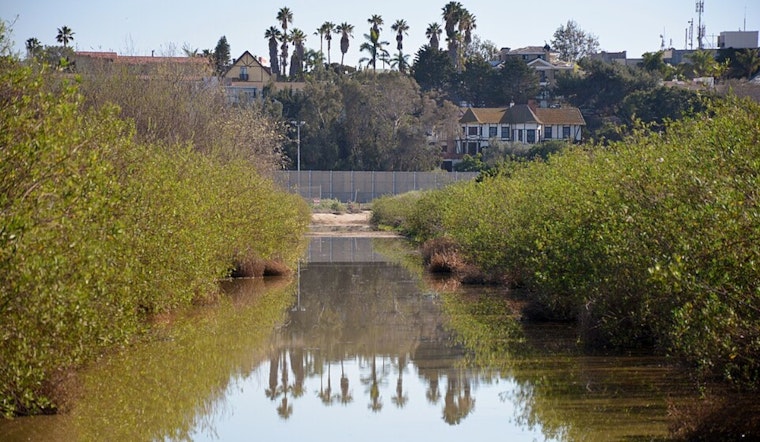
San Diego leaders are trying to turn a decades-long sewage saga into an actual cleanup plan, rolling out a new five pillar blueprint that targets the foul flows from Tijuana that have battered South Bay beaches and neighborhoods for years. The report links quick fixes, such as finishing wastewater plant upgrades and cutting off dry weather flows, with longer term moves like stable operations funding, real time monitoring and wastewater reuse planning. Unveiled at a press event near the Tijuana River National Estuarine Research Reserve, the plan is pitched as a durable alternative to whack a mole emergency responses and aims to reduce both chronic beach closures and the stench that has become a grim part of coastal life.
Report, Who Wrote It and What It Covers
According to CalMatters, the paper, titled "Tijuana River Contamination Crisis: A Five-Pillar Framework for Binational Solutions," was released by the San Diego Regional Chamber of Commerce and the Prebys Foundation and was authored by Maria Elena Giner and Doug Liden. The authors group their fixes into five focus areas: infrastructure funding, operations and maintenance, governance and accountability, public communication and long term water reuse planning.
Air Quality and Health Evidence
New peer reviewed research from UC San Diego and partners has tied the polluted Tijuana River to serious air quality problems, finding that it can emit hydrogen sulfide and hundreds of other gases at levels that exceeded air quality standards during neighborhood monitoring, a likely explanation for residents’ respiratory complaints and the rotten egg smell that hangs over parts of the South Bay, per the Scripps Institution of Oceanography. The study documented hydrogen sulfide spikes thousands of times higher than typical urban levels and urged both immediate and long term responses to protect public health.
Infrastructure Is Failing on Both Sides of the Border
The report finds that roughly 75% of Tijuana’s wastewater network and about half of its pump stations need urgent repairs, while rapid population growth and years of deferred maintenance have left systems vulnerable to breakdowns and spills, according to CalMatters. On the U.S. side, the South Bay International Wastewater Treatment Plant had more than a third of its equipment rated in critical condition in 2022, and water testing has detected pathogens, including fecal coliforms, E. coli and enterococci, along with industrial metals such as copper, nickel and zinc that have fueled repeated beach closures and illnesses in southern San Diego County.
What the Authors Recommend
Among the concrete steps, the authors urge the United States to lock in recurring operations funding, with the paper suggesting up to $30 million a year to operate and maintain the South Bay plant, and they recommend a tiered fee structure designed to discourage untreated discharges, per inewsource. The framework also calls for more robust real time monitoring and public beach reports, a joint binational communication strategy, an annual "State of the River" forum and a push to prioritize wastewater reuse planning instead of letting that work linger on the back burner.
Binational Tools and Recent Commitments
The authors highlight existing treaty tools and put the U.S. Section of the International Boundary and Water Commission at the center of any lasting fix, noting that the IBWC is leading new monitoring and testing programs in the valley, per its public updates in IBWC documents. Federal updates show that the United States and Mexico signed an MOU in July 2025 and are negotiating additional treaty minutes and expedited project timelines, steps the report describes as necessary but not sufficient if they are not paired with reliable operations funding, according to the U.S. EPA.
Local Reaction and Community Stakes
Community groups and public health researchers have welcomed the roadmap while warning that the situation on the ground is already a full blown health emergency. Studies and partner organizations estimate that more than 100 billion gallons of untreated sewage, industrial waste and runoff have poured into the estuary in recent years, per the Prebys Foundation. Hoodline previously covered rising sewage odors and county measures like free air purifier distribution and health monitoring, underscoring how deeply the crisis has seeped into everyday life in affected neighborhoods.
The real test for the five pillar plan will be money and follow through: whether federal leaders commit to recurring operations funding, whether Mexico speeds up repairs to collectors and pump stations, and whether the IBWC and EPA provide regular, transparent public reporting. Over the next year, residents and advocates will be watching IBWC minutes, EPA public updates and local project timelines to see if this blueprint stays on paper or finally translates into a cleaner river and open beaches.





.jpg)