

























































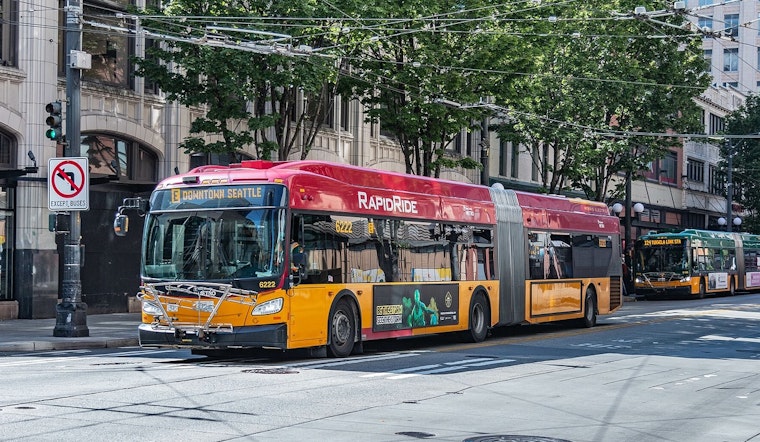
After years of planning and paperwork, shovels finally hit the dirt Thursday as King County Metro and federal partners formally kicked off construction of the RapidRide I Line, the bus rapid transit upgrade that will replace Route 160 and tie together Renton, Kent, and Auburn. The ceremony, highlighted in a county post on X, marked the moment the project shifted from design meetings to visible work in the street. Once service launches, riders are promised faster trips, all-door boarding, and revamped stations along the corridor.
It was a genuine pleasure to host our federal partners who did so much to make this day a reality! https://x.com/i/status/2034717225979163051
— King County Metro 🚏 (@kingcountymetro) March 19, 2026
Federal Money Behind the Shovels
The project is riding a substantial wave of federal cash. The Federal Transit Administration awarded a $79.7 million construction grant in January 2025, according to the FTA. The Puget Sound Regional Council added nearly $19 million of its federal funding to the effort, bringing total federal support to roughly $99 million, the PSRC reports.
FTA Region 10 Administrator Susan Fletcher joined local officials at the groundbreaking, according to Metro's post on X, underscoring that Washington, D.C. is firmly invested in getting the I Line built.
What Riders Will See and When
The new line is not just a fresh coat of paint on an old route. The 17-mile corridor will feature 41 new stations with shelters, lighting, and real-time arrival signs, the FTA said in its funding announcement. The agency also called out almost 2 miles of exclusive bus-only lanes and off-board fare payment to speed up boarding and keep buses moving.
Between the federal money and local contributions, the full capital package for the I Line is expected to land somewhere between 170 million and 175 million dollars, and service is currently slated to begin in 2027, according to KIRO 7.
Why It Took So Long
If this feels like a long time coming, that is because it is. The RapidRide I Line has been under discussion for years and has repeatedly slipped behind schedule thanks to a tangle of design revisions, permitting hurdles, and property acquisition challenges. A December review of RapidRide projects pointed to lengthy permitting timelines, conflicts with existing utilities, and drawn-out coordination over federal grants as major culprits, according to The Urbanist.
That backstory helps explain why Thursday's event carried more weight than a typical photo op. For local leaders, it was a public signal that the slow part is finally giving way to actual construction.
What This Means for Riders and the Region
The I Line is designed as a backbone route for South King County, knitting neighborhood bus service into the broader regional transit network. Project partners say the line will strengthen transfers to Sounder commuter rail in Kent and Auburn and connect with the future Renton Transit Center, improving options for riders who currently juggle multiple transfers to reach work or school.
Sound Transit and local officials have framed the I Line as part of a wider effort to pair transit upgrades with job centers and transit-oriented development in Renton, Kent, and Auburn, according to Sound Transit. In the coming months, residents along SR 167 and other streets in the corridor should start seeing station construction and street changes take shape.
Metro says the construction phase will ramp up as crews build out stations and install bus-priority features along the route. Riders can keep tabs on progress through agency updates while outreach teams continue working with neighborhoods along the future I Line.





.jpg)