

























































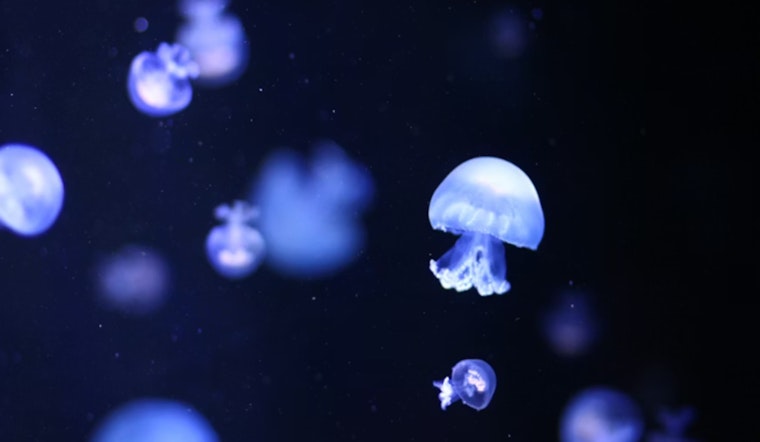
Portuguese man-of-war have been washing up along Galveston Island beaches this week, and local officials are telling beachgoers to give them plenty of space. They may look like pretty, translucent blue pool floats, but those trailing tentacles can deliver a nasty sting even after the animals have dried on the sand. With warm weather and spring-break crowds packing the shoreline, lifeguards are asking visitors to dial up their caution.
What Is a Portuguese Man-Of-War?
The Portuguese man-of-war is not a single jellyfish at all, but a siphonophore, essentially a colony of specialized organisms that function together as one animal. According to the Texas Parks and Wildlife Department, it has a transparent, gas-filled float on top and long, thread-like tentacles below that are loaded with thousands of stinging cells.
How Dangerous Are They?
Sightings have picked up along Galveston and the rest of the Texas coast this week, with beach visitors posting photos of washed-up man-of-war and swollen welts to social media, as reported by the Houston Chronicle. The tentacles can trail dozens of feet behind the float and pack a powerful sting. Some research institutions note reports of tentacles extending far below the surface with lengths well over 100 feet in extreme cases, according to the Woods Hole Oceanographic Institution.
If You Get Stung
Stings can cause burning, whip-like welts on the skin along with localized pain. The Texas Parks and Wildlife Department advises against rubbing the affected area, which can spread the venom. Instead, remove any remaining tentacles by gently scraping them off with a credit card or driver's license, rinse the area with seawater, and then use hot, but not scalding, water or a warm compress. Seek medical help right away if there are signs of a severe allergic reaction or if symptoms worsen.
Heed Beach Flags And Local Notices
Officials say it is a good idea to keep one eye on the surf and the other on the flagpoles. Pay attention to posted beach flags, where purple typically signals a marine-life hazard, and follow lifeguard directions, according to Click2Houston. Galveston authorities have also closed several beach access points during the spring-break period to help manage crowds, which is one reason officials stress staying close to lifeguard stations, FOX 26 Houston reported.
Bottom Line
If you spot a man-of-war in the surf or washed up on the sand, do not touch it, keep kids and pets away, and let beach patrol know. For recent photos and on-the-ground coverage of the spike in sightings, check out reporting by the Houston Chronicle.





