

























































A high-stakes fight over whether New York police can quiet a street preacher instead of controlling a hostile crowd has arrived at the U.S. Court of Appeals for the Second Circuit. The case stems from Pastor Aden Rusfeldt’s June 2021 preaching near Washington Square during PrideFest, when a crowd turned aggressive and officers ordered him off the sidewalk. The Liberty Justice Center has now stepped in with an amicus brief calling the arrest a forbidden “heckler’s veto,” sending the question back to a court that could reshape how the city balances speech and public order.
What happened
According to the district court’s opinion, Rusfeldt stood on a public sidewalk in lower Manhattan during PrideFest, holding a banner while preaching. Video in the record shows bystanders shouting at him, with some throwing cups and bottles. Police officers told him to shorten the metal pole holding the banner and to move for safety. After a series of pauses and movements, officers arrested him for disorderly conduct and failing to disperse. The courtroom record spells out those on-scene interactions and the police responses in detail. Justia contains the factual findings and video descriptions used at the preliminary-injunction phase.
The trial and the verdict
A jury later sided with the City at trial, and the district court entered judgment for defendants after denying Rusfeldt’s post-trial motions. Inner City Press reported on the June 2025 trial proceedings and the jury’s verdict, and Tampa Free Press summarized how the case moved to the appeals court after that outcome. Together, those developments form the procedural backdrop for the current appeal in the Second Circuit.
Liberty Justice Center’s intervention
The Liberty Justice Center has filed an amicus brief asking the Second Circuit to reverse, arguing that the NYPD’s conduct “created a heckler’s veto” by shutting down a speaker because of audience hostility. In a March 2, 2026 statement, Ryan Morrison of the Liberty Justice Center warned that "law enforcement cannot allow the ‘heckler’s veto’ to cancel the First Amendment in today’s polarized society," a line the brief uses to frame its argument. The filing contends that when government action is triggered by the content of speech or by the hostility it provokes, strict scrutiny should apply.
What’s in the appellate record now
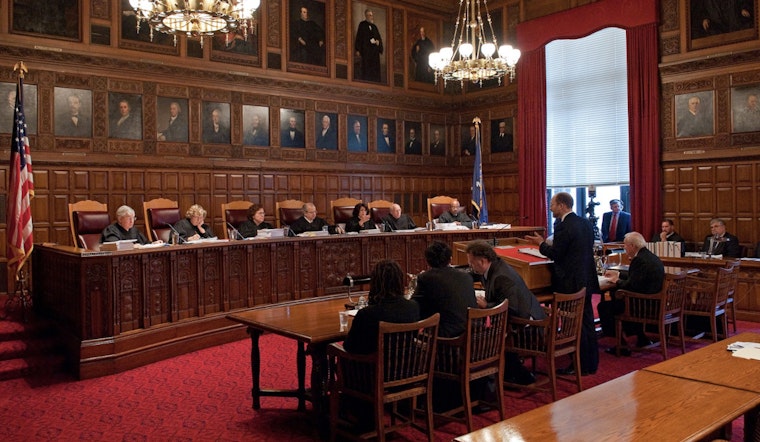
The appeal is captioned Rusfeldt v. City of New York, No. 25-2825, in the Second Circuit, with the notice of appeal and the district court’s opinion and judgment already on file. Justia shows that the appeal was opened in November 2025 and lists scheduling orders for the briefs and appendix. The Second Circuit will now decide whether the trial and the district court’s rulings lined up with Supreme Court precedent on protecting controversial speech.
Legal stakes and precedent
The Supreme Court has long warned against a “heckler’s veto,” rejecting rules that let listeners’ likely reactions decide who may speak, a principle the Court discussed in cases such as Forsyth County v. Nationalist Movement. FindLaw and related rulings form the backbone of the Liberty Justice Center’s argument that police must protect speakers, not silence them. The brief also faults the district court for allowing a “promote public order” framing that, the filing says, improperly shifts the burden onto the speaker to prove the arrest lacked justification. Liberty Justice Center lays out that theory in detail.
Why New Yorkers should watch
More than one man’s arrest is on the line. The Second Circuit’s decision could influence how NYPD officers handle flashpoint street encounters where speech and crowd reaction collide. Commentators who track free-speech doctrine note that appellate rulings in cases like this can shift policing practices around protests and public events, especially in dense urban settings where crowd dynamics can turn fast. Reason underscores how any appellate guidance here could echo well beyond a single park corner.





