

























































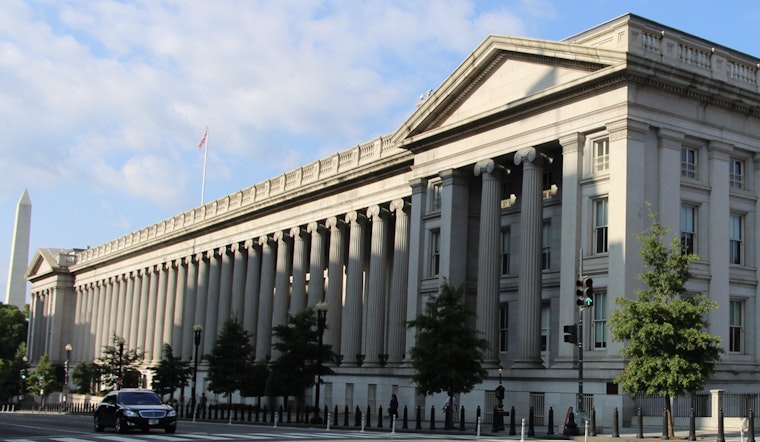
A federal judge in Tyler, Texas on Friday struck down a Treasury Department rule that would have required companies buying U.S. homes with cash to disclose their beneficial owners. The decision stops a planned nationwide reporting regime that was aimed at tracing potentially illicit funds tied to non-financed residential transfers, putting a major transparency push on hold just as regulators and the real estate industry were gearing up for broader reporting in 2026.
U.S. District Judge Jeremy Kernodle sided with a challenge brought by a Texas title company and the Pacific Legal Foundation and found that the agency had exceeded its authority, according to Reuters. His order sets aside FinCEN’s 2024 regulation that would have required certain settlement and title agents to collect and transmit beneficial ownership information for non-financed transfers to specified entities.
What the rule would have done
The rule, formally published as the Anti-Money-Laundering Regulations for Residential Real Estate Transfers, was finalized in August 2024 and laid out obligations for “reporting persons” such as title companies, closing agents and settlement agents to file reports on certain non-financed transfers. As detailed in the Federal Register, the regulation was designed to cover transactions where homes were purchased without an AML-compliant lender and paid for at least in part with cash or equivalent funds.
A years-long enforcement push
FinCEN has long used targeted orders to collect similar information. Beginning in 2016, geographic targeting orders required title firms to identify the natural persons behind shell companies buying high-end homes in Manhattan and Miami. FinCEN and other supporters said the broader rule was built on data that flowed from those early orders.
The lawsuit
The challenge was filed by East Texas Title Companies (doing business as Flowers Title Companies) and advanced by the Pacific Legal Foundation, which argued that the rule unlawfully conscripted private businesses into government surveillance and exceeded FinCEN’s statutory authority. Court filings and case records summarized by the Civil Rights Litigation Clearinghouse, along with contemporaneous coverage, indicate that the complaint raised both constitutional and administrative-law claims against Treasury and FinCEN.
Money-laundering stakes
Treasury officials and anti-corruption advocates argued that the regulation was necessary to deter and detect illicit money flowing into U.S. real estate. Treasury Secretary Janet Yellen has cited estimates that about $2.3 billion was laundered through U.S. real estate between 2015 and 2020. In public Treasury Department remarks, officials have stressed the government’s view that greater transparency in property ownership helps law enforcement trace illicit proceeds.
What comes next
The district court ruling can be appealed to the federal courts of appeals, where a panel would review whether FinCEN’s use of the Bank Secrecy Act supports the agency’s nationwide reporting requirement. The timing and path of any appeal will depend on whether the government seeks emergency relief or opts for a more standard appellate route; appeals practice in the federal system is outlined in resources such as those from the Federal Judicial Center.
FinCEN did not immediately respond to requests for comment, Reuters reported, and both sides indicated that the dispute could move into further rounds of litigation or potentially prompt fresh rulemaking, depending on how any appeal plays out.
Why this matters locally
Title companies and settlement agents in cities that have long been covered by geographic targeting orders, including New York, Miami and other major markets, had already begun preparing systems and procedures to collect the new data. Industry voices warned that the reporting requirements would impose significant compliance costs. Coverage in outlets such as Forbes documents how the plaintiffs described the burden on local firms, while advocates argued that the data is vital to prevent dirty money from distorting local housing markets.
For now, Judge Kernodle’s decision pauses a major step in Treasury’s effort to make cash-purchase reporting uniform across the country, leaving a patchwork of targeted orders and local enforcement tools in place until appellate courts or new rulemaking ultimately settle the issue.





