

























































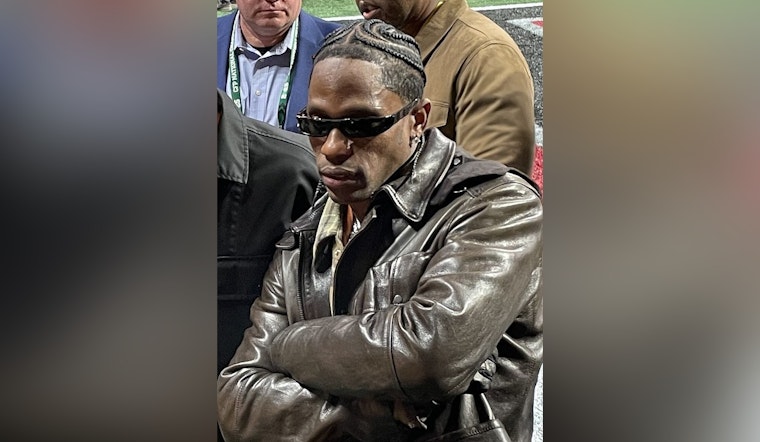
Travis Scott is wading into one of the most closely watched culture-and-courts battles in the country, urging the U.S. Supreme Court to step in before Texas executes a man whose rap lyrics were used to help send him to death row.
In filings this week, lawyers for the Houston rapper argue that turning James Garfield Broadnax’s handwritten verses into evidence of future dangerousness crossed a constitutional line. Broadnax, convicted in 2009 for a double homicide near Garland, Texas, is scheduled for execution on April 30, 2026 unless the justices step in.
What the court papers say
According to a petition filed with the Supreme Court, prosecutors introduced more than 40 pages of Broadnax’s handwritten rap lyrics during the punishment phase and urged a nearly all white jury to treat those verses as a "self admission" of criminal propensity. The filing asks the justices to stay Broadnax’s April 30 execution and to decide whether using protected artistic expression this way violated due process, equal protection and the Eighth Amendment.
What Travis Scott's brief argues
Scott’s legal team filed a separate amicus brief the same day, contending that letting a death sentence rest even partly on protected artistic expression would "functionally operate as a categorical and straightforwardly unconstitutional content based penalty," as detailed by Rolling Stone. The brief warns that ripping rap out of its artistic and cultural context risks turning a genre closely associated with marginalized creators into a shortcut for punishment instead of subjecting it to neutral evidentiary analysis.
A broader coalition has weighed in
Dallas appellate attorney Chad Baruch has also filed an amicus brief backed by more than 30 artists, scholars and industry leaders, including Killer Mike, T.I., Young Thug, Fat Joe and Anthony Anderson, who argue prosecutors leaned on Broadnax’s lyrics to inflame racial and anti rap bias, according to Business Wire. Court filings and reporting also note that jurors twice asked to review Broadnax’s lyrics during deliberations before returning a death sentence, a detail outlined by the Dallas Morning News. For critics, that is a pretty clear sign the art was doing heavy lifting in the jury room.
Legal context
Advocates point to Hart v. State, a 2024 Texas Court of Criminal Appeals decision that reversed a conviction after finding that the admission of rap videos and lyrics was highly prejudicial, a ruling summarized by Leagle. That opinion, along with a growing stack of lower court rulings, gives the Supreme Court a ready vehicle to spell out when artistic expression crosses the line and becomes unfair propensity evidence.
What happens next
The stay application asks the justices to act before Broadnax’s April 30 execution date. The petition itself notes that if the Court grants review, briefing on whether to hear the case could run into late March, with full merits briefing stretching into the spring. The justices must decide both whether to take the case and whether to pause the execution, a pair of moves that could quickly turn one Texas sentencing fight into a national test case.
Why it matters
If the Court takes the case, its ruling could determine whether prosecutors across the country can treat lyrics and other artistic words as proof of future dangerousness. Advocates say that would chill expression that is tightly tied to Black artists and communities, an argument threaded throughout the artists’ filings and public statements. Texas attorneys counter in their own filings and in reported coverage that the lyrics were used sparingly and were relevant to assessing future dangerousness. The Supreme Court now has to decide whether that line was fairly drawn or whether it crossed into punishing the art, not just the crime.



.jpg)