

























































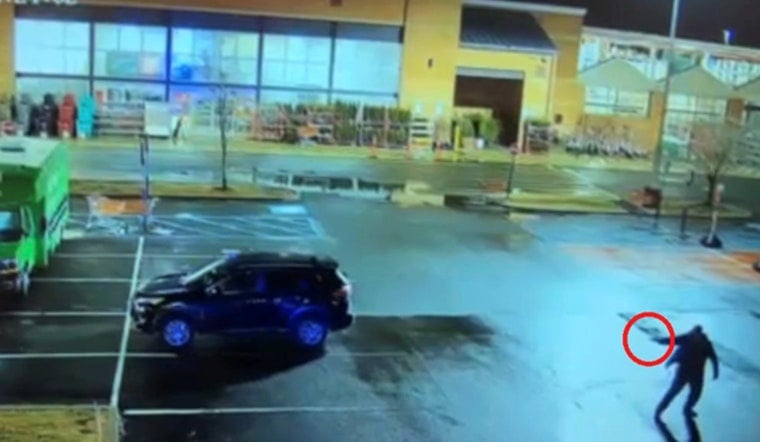
New York Attorney General Letitia James’ Office of Special Investigation (OSI) said Tuesday it will not bring criminal charges against the NYPD officers who shot and killed Winston Johnson in a Staten Island Home Depot parking lot last year. Investigators said they could not disprove beyond a reasonable doubt that the officers’ use of deadly force was legally justified, and noted that a full written report will be released at a later date.
According to a press release from the Attorney General’s office, the incident began just after 5:15 a.m. on March 6, 2025, when a 911 caller reported a man firing shots at the Home Depot on Veterans Road. Officers arrived within minutes and saw Mr. Johnson standing by his vehicle holding a gun. OSI said he fired one shot into the air, then pointed the weapon at officers. Police used their vehicles for cover and opened fire. The office said body-worn camera and store surveillance footage captured the confrontation, and that officers recovered a gun at the scene. Mr. Johnson was taken to a hospital, where he was pronounced dead, according to the New York Attorney General’s Office.
What authorities said at the scene
Contemporaneous coverage described officers repeatedly shouting for Mr. Johnson to drop his weapon before shots were fired. Reporting by Gothamist noted that officers pulled up in both marked and unmarked vehicles, and that NYPD specialized units later responded. Early accounts also said investigators were reviewing body-worn camera and surveillance footage and were looking into whether the original 911 call might have been a possible “suicide-by-cop” situation.
How OSI evaluates officer-involved deaths
Under New York’s Executive Law Section 70-b, the Attorney General is required to maintain a special office that investigates deaths that may involve police or peace officers and then decides whether to present evidence to a grand jury or instead issue a final public report. The law mandates a “full, reasoned and independent investigation” that can include interviews, forensic testing, and review of audio and video recordings. Operating within that framework, OSI concluded it could not say that a prosecutor would be able to disprove, beyond a reasonable doubt, the officers’ claim that their actions were justified. The statutory language is available in Executive Law Section 70-b.
Broader context and accountability questions
OSI decisions not to file charges in police shooting cases have often sparked criticism from families and advocates, who argue that the criminal standard is so high that very few officers are ever prosecuted. Previous cases, including the Attorney General’s decision in the Win Rozario shooting, have prompted renewed calls for expanding non-police crisis response and have reignited debate over discipline and oversight inside the NYPD. For background on how similar investigations have played out in New York City, see reporting by CBS New York.
What comes next
The Attorney General’s office said a final Investigation Report, detailing its legal analysis and the evidence it reviewed, will be issued later. That review, OSI noted, relied on available video and forensic material. Separate from the criminal inquiry, administrative or disciplinary proceedings could still move forward within the NYPD or through the Civilian Complaint Review Board. For more on how OSI handles notifications and reports, the office points to its internal policy guidelines and the Executive Law that created the unit.





