

























































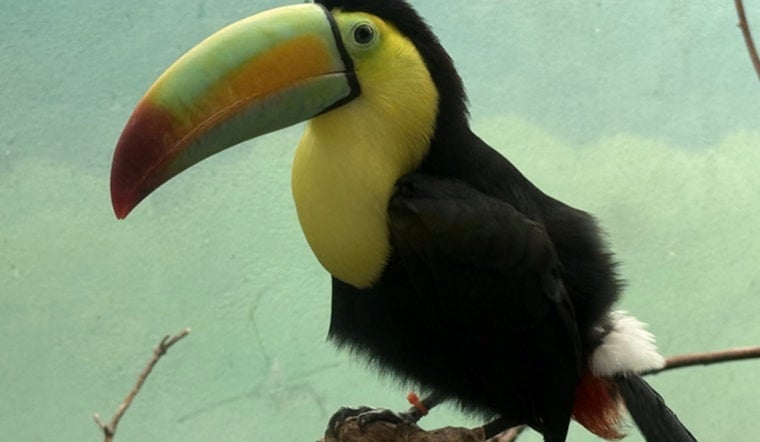
It is a long way from a car dashboard compartment to a lush indoor rainforest, but two young keel-billed toucans have made that journey and are now on view at the Bronx Zoo’s World of Birds. The pair is part of a group of 14 juveniles confiscated at the U.S.-Mexico border last year; ten have since been moved to partner institutions, while four remain under the Bronx Zoo’s care.
From Dashboard To World Of Birds
According to a press release from the Wildlife Conservation Society, the WCS Bronx Zoo received 14 juvenile keel-billed toucans on July 31, 2025, after the birds were confiscated at the Otay Mesa Port of Entry. The zoo reports that the ten males and four females, estimated at three to four months old, arrived sedated and bound, suffering from malnutrition, respiratory illness, and other injuries.
Following months of intensive, specialized care, the Bronx Zoo worked with Association of Zoos and Aquariums partners to place ten of the toucans at accredited institutions. Four birds stayed in the Bronx for long-term care. Two males are now on exhibit in World of Birds, while two others remain off exhibit as a future breeding pair.
How They Were Found And The Federal Case
The seizure started when a Customs and Border Protection canine alerted officers at Otay Mesa, prompting agents to pry open a vehicle’s dashboard compartment. Inside, they found the wrapped, sedated toucans hidden from view.
The details and criminal charges were laid out by the U.S. Attorney’s Office, Southern District of California, which charged the driver with smuggling protected wildlife under federal law. “Smuggling endangered birds by sedating them, binding their beaks, and hiding them in car compartments is not just cruel, it’s criminal,” prosecutors said in the release.
Why Reintroduction Wasn’t An Option
WCS veterinarians report that many of the toucans arrived with lasting health problems, including broken tails, a fractured leg, and metabolic damage linked to prolonged starvation. Those conditions made a safe return to the wild impractical.
Keel-billed toucans are protected under the Wild Bird Conservation Act and listed on Appendix II of CITES, the organization noted, which restricts trade and often leaves accredited facilities as the only appropriate long-term homes for confiscated birds. The zoo’s veterinary and ornithology teams credit careful triage, tailored nutrition plans, and long-term husbandry with getting the toucans back on their feet, so to speak.
Why This Matters Now
Conservationists and law enforcement officials say the Otay Mesa case fits into a broader spike in live-animal smuggling through Southern California ports, where investigators have repeatedly found birds stuffed into dashboards, boots, and even clothing. The Los Angeles Times recently detailed related prosecutions and noted that surviving birds from other seizures were also sent to the Bronx Zoo.
The timing of a March 2026 sentencing tied to these cases, along with the zoo’s April statement, helps explain why this border bust has resurfaced in the local conversation this spring.
Legal Implications
Prosecutors pursued charges under federal smuggling and importation statutes, and court filings show the defendant ultimately pleaded guilty and was ordered to pay restitution to cover the birds’ care. The Department of Justice’s Environmental Crimes bulletin and U.S. Attorney filings describe the charges and the March 2026 disposition, which included payment into the Lacey Act Reward Fund.
At the same time, Congress and industry groups have pushed for a formal Wildlife Confiscations Network to streamline where seized animals go next, an idea that would matter a lot to birds like these. The bill text is available on Congress.gov.
See Them At World Of Birds
Today, two of the rehabilitated toucans are on view in the World of Birds exhibit at the Bronx Zoo, where staff say the survivors are doubling as ambassadors for the fight against the illicit pet trade. Their story is now part of the zoo’s public education efforts on cruelty and conservation impacts tied to wildlife trafficking.
Local coverage from News 12 Bronx on April 30, 2026, highlighted the zoo’s role in the multagency response and the long road that brought these birds from a hidden compartment at the border to a second chance in the Bronx.





