

























































Brooklyn mother Yi Fang Chen has taken her fight over elite high school admissions to federal court, accusing Mayor Zohran Mamdani, schools chancellor Kamar Samuels and the New York City Department of Education of "racially engineering" who gets into the city’s specialized high schools in order to cut down on Asian American enrollment. In an April 23 filing, Chen says tweaks to the Discovery pathway that reserve a fifth of seats and tighten eligibility rules cost her son a spot at Stuyvesant High School, even though he scored 558 on the SHSAT. Her lawsuit asks a federal judge to freeze the newer Discovery rules and bring back what she calls a strictly merit-based process for students like her son.
What the lawsuit alleges
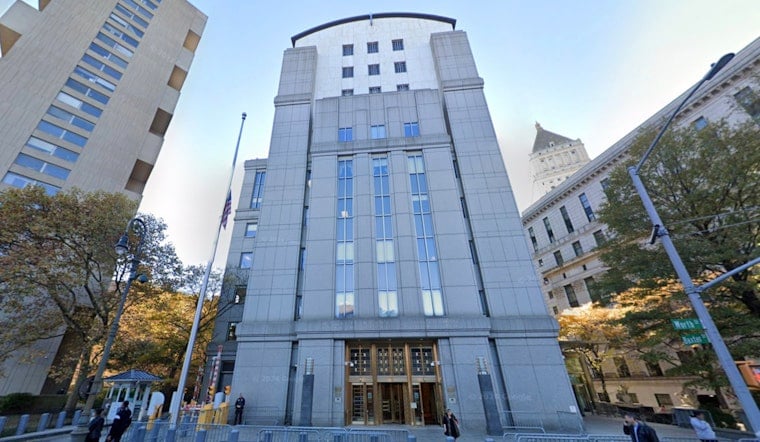
Chen’s complaint was filed in the U.S. District Court for the Southern District of New York and names Mayor Mamdani, Chancellor Samuels and the DOE as defendants. It argues that the city’s revamped Discovery program "was adopted with the intent to decrease the number of Asian-American students," which she claims violates the Equal Protection Clause and Title VI. According to Pacific Legal Foundation, her son sat for the SHSAT in fall 2025, earned a 558, and missed Stuyvesant’s 2026 cutoff score of 561 by three points. The complaint says the 20 percent Discovery set-aside shifted more than 160 seats away from applicants in his position. The filing lists Pacific Legal Foundation attorneys as counsel and seeks declaratory relief along with preliminary and permanent injunctions.
How Discovery works
The Discovery Program is a summer bridge track that is supposed to expand access for certain disadvantaged students, but the city’s rules about who can even apply leave some students out. As outlined by the NYC Department of Education, students who scored 495 or above on the SHSAT are not eligible for Discovery, and public school participants generally must attend a school or live in a census tract with an Economic Need Index of at least 60 percent. Chen’s lawsuit points to that ENI cutoff and the DOE’s internal modeling as supposed evidence that officials chose those criteria in order to alter racial outcomes at the specialized high schools.
Legal backdrop
The complaint drops into the middle of a long-running legal fight over these Discovery changes. In 2024, the U.S. Court of Appeals for the Second Circuit wiped out a prior district court ruling and allowed earlier plaintiffs to move ahead with equal protection claims that dig into whether officials’ motives made the program unlawful. The appellate panel stressed that questions about intent, and about whether particular students were kept out by the eligibility rules, needed more factual development. Lawyers for Chen are betting that same reasoning will carry weight in her case. That precedent also means both sides are likely to chase internal DOE records and expert modeling during discovery.
Who’s defending the program
Civil rights and community organizations, including the NAACP Legal Defense Fund, the NYCLU and LatinoJustice, have defended the Discovery expansion in court as a modest but necessary step to address long-standing racial and geographic gaps at the specialized high schools. In motions to intervene, those groups told judges that the changes were designed to open doors for Black and Latino students who have historically been underrepresented at the SHSs, and they urged the courts to keep the policy in place. That sets up the central clash in this case: one side calls it a remedy for exclusion, the other calls it racial engineering.
What’s next
Chen’s lawsuit, captioned Yi Fang Chen v. Zohran Mamdani, No. 1:26-cv-03355, is still in the early pleading stage. She is asking the court to declare the Discovery revisions unconstitutional and to block their enforcement. If the judge allows wide-ranging discovery into what officials were thinking, as the Second Circuit signaled would be appropriate in the earlier appeal, the case could surface internal DOE models and communications that become key evidence about whether race played a role in crafting the policy. The result could alter how dozens of seats at New York’s most competitive public high schools get handed out each year, and it is almost certain to trigger aggressive filings from city lawyers and outside intervenors.
Legal implications
The complaint leans on the Fourteenth Amendment and Title VI and frames the fight as a classic intent-based equal protection challenge, not a broadside against the use of a test itself. It cites recent Supreme Court guidance on race-conscious admissions and asks the judge to apply those ideas here. Because the Second Circuit has already said that plaintiffs may press claims about intent and individual exclusion under the updated Discovery rules, the case is teed up for more factual digging before any major ruling. However it comes out, the lawsuit will probe where the line sits between race-neutral policy tools that try to broaden opportunity and unlawful efforts to shape racial outcomes in public schools.




