

























































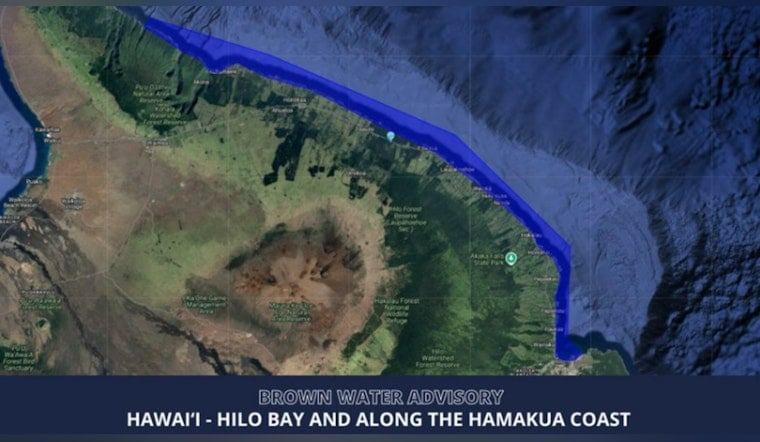
Hilo’s shoreline is officially in the “look, don’t touch” category for now, after the Hawaiʻi State Department of Health slapped a brown water advisory on Hilo Bay and the Hāmākua Coast late Thursday. The warning urges beachgoers to steer clear of nearshore water that looks brown or murky, citing storm-driven runoff that can push sediment, bacteria and other pollutants into popular swimming and shoreline-fishing spots. The advisory spells out stretches of the windward coast and even flags Akaka Falls State Park as among the areas affected. Until testing and tidal flushing show improvement, residents and visitors are being told to treat any visibly discolored water as a potential health risk.
The advisory went public on X, where the department told people to “stay out of waters when the water appears brown or murky” and pointed followers to its Clean Water Branch for ongoing updates.
A #BrownWaterAdvisory has been issued at Hilo bay and along the Hamakua Coast on Hawai‘i Island. The @HawaiiDOH advises beach users to stay out of waters when the water appears brown or murky, especially following storms or heavy rain. For more: https://t.co/RFlm87S0EC https://t.co/WVu5XG0NP9
— Hawaiʻi State Department of Health (@hawaiidoh) April 30, 2026
Why Hilo Bay Is Vulnerable
Hilo sits below some of the wettest mountains in the state and takes in heavy freshwater flows from the Wailuku and Wailoa rivers. When big rains hit, those rivers can dump large plumes of sediment and bacteria into the bay, turning the water cloudy and driving up contamination levels. A University of Hawaiʻi at Hilo study on bay circulation and storm impacts found that limited flushing in the bay helps explain why turbidity and bacterial spikes can linger after storms. For a technical breakdown of those patterns, see the University of Hawaiʻi at Hilo.
What The Advisory Means For Swimmers
A brown water advisory is essentially a visual red flag: if the ocean looks brown or murky, it likely contains polluted runoff. That means officials want people to avoid swimming, wading or harvesting shellfish until conditions clear up. State guidance commonly suggests waiting 48 to 72 hours after heavy rain, and until a beach has had full sunshine and tidal flushing, before heading back into the water to lower the risk of exposure. For more on the health issues tied to runoff and the state’s specific recommendations, check the Hawaiʻi Department of Health.
How Long It Might Last
The lifespan of a brown water advisory depends on how the weather behaves. Continued rain, strong stream flows and certain tidal conditions can keep plumes hanging around, while a break in the storms can help advisories clear in just a couple of days. For island-by-island updates and historic context on how often these advisories hit the Hilo area, community trackers and local outlets maintain rolling coverage; see Big Island Now and SafeToSwim Hawaii for recent posts.
On the ground, county lifeguards and park crews typically respond by putting up warning signs at affected beaches while sampling teams collect follow-up water tests. State procedures call for the Department of Health to alert local agencies and the public as new results come in. Local coverage has repeatedly shown those advisories driving temporary beach closures, adjustments by tour operators and short-term park restrictions; for past examples, see Big Island Video News.


