

























































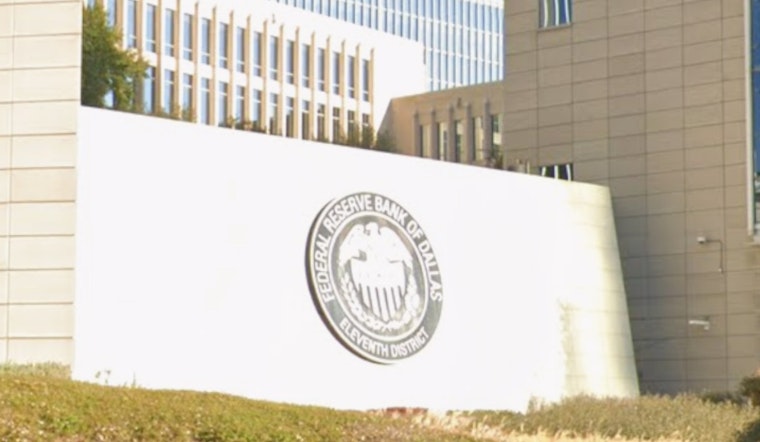
Dallas Fed President Lorie Logan used a Thursday appearance at the central bank’s Eleventh District Banking Conference to spell out how the Federal Reserve could slim down its multitrillion-dollar balance sheet without rattling Wall Street. Speaking to bankers and supervisors on home turf, she walked through a set of operational tweaks that would curb banks’ appetite for excess reserves and widen access to the Fed’s standing liquidity tools. Her focus was squarely on plumbing and process, a practical rather than ideological take on what has become a national argument over how big the Fed should be.
The Fed’s securities holdings sit at roughly $6.6 trillion, and reserve balances held by depository institutions are close to $3 trillion, reflecting the post-pandemic buildup and more recent runoff. Those figures show up in the Federal Reserve’s weekly H.4.1 report via FRED for total assets and FRED for reserve balances.
Logan's playbook: lower reserve demand
Logan said “the Fed should use its balance sheet efficiently and effectively” and outlined options that include broadening access to Fed liquidity facilities and nudging banks to hold smaller cash cushions. In her telling, those changes would allow reserves to drift lower over time instead of forcing the Fed into large, fast sales of Treasuries that could whipsaw markets. Reuters reported her remarks from the Dallas event.
The technical puzzle: reverse repos and timing
Logan and other Fed officials have signaled that the endgame for balance sheet runoff hinges on what happens to the central bank’s overnight reverse-repo balances and on the reserve-management purchases the FOMC approved after it stopped runoff late last year. She emphasized a slower, clearly signposted path for shrinking holdings so that money markets can reshuffle liquidity on their own rather than react to abrupt asset sales. The Dallas Fed hosted the conference and laid out the event details on its website, Dallas Fed.
Politics and pushback
Calls for a much smaller Fed footprint have been growing among former officials and outside critics, with Kevin Warsh emerging as one of the loudest voices. His arguments have reignited market chatter about the risks and rewards of a leaner balance sheet. Coverage from Axios and other outlets notes that cutting the portfolio far more aggressively would almost certainly require regulatory changes or close coordination with the Treasury to avoid market stress. Research summarized by the Bank Policy Institute (BPI) points to specific regulatory tweaks that could lower banks’ demand for reserves over time, a step many observers see as crucial for durable downsizing.
For now, Logan is framing the choices as nuts-and-bolts decisions about timing and tools, not as a new policy target for how small the Fed should become. The bigger political questions about the ultimate size of the central bank’s footprint and who gets to draw that line are being punted to another day. In the meantime, regulators, bankers and markets will be watching to see whether the Fed can thread the needle and trim its balance sheet while keeping the financial system running smoothly.


