

























































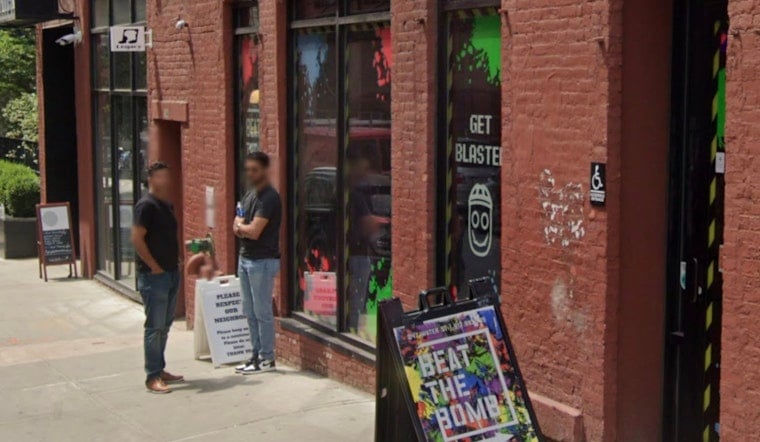
DUMBO’s cobblestone streets and waterfront views are quickly turning from a backdrop for quiet studios into a stage for full-blown outings. In the past few years, immersive game rooms, arcade-packed brewpubs and rooftop hangouts have taken over spaces that once held design studios and light manufacturing. The neighborhood’s ground-floor scene has shifted from neat stacks of SKUs to in-person moments made for sharing.
As reported by Crain's New York Business, DUMBO is seeing a rise in experiential retailers that focus on events, bookings and social-media-ready experiences instead of classic storefront sales. Leasing brokers tell the outlet that landlords are increasingly targeting tenants who can draw steady foot traffic, especially on weekends and evenings, rather than relying on traditional retailers that live or die by daytime walk-ins. That shift is reshaping which ground-floor businesses get built out inside DUMBO’s former industrial shells.
Immersive games and arcade brewpubs
One longtime example is Beat The Bomb, an immersive team game where players gear up and race to disarm paint, foam or slime bombs. The operator heavily promotes Brooklyn bookings and group events on its site, and local coverage and listings show it has been a DUMBO draw for several years, leaning hard into group outings and social-media moments. For bookings, see Beat The Bomb. For background on the concept, see local coverage from BKReader.
The mix now also includes hybrid hospitality and entertainment spots. The Randolph bills itself as a brewpub with arcade games, a rooftop and regular programming that keeps the place busy after dark. Neighborhood calendars and business listings show frequent events, game nights and rooftop bookings that encourage people to linger on the block instead of just passing through. For schedules and event details, see the venue listing at The Randolph and neighborhood information at DUMBO.
Why landlords are signing experience-first tenants
Developers behind modern DUMBO have long treated events and destination retail as key tools for placemaking, and they now view experiential tenants as a way to keep streets lively for residents, office workers and tourists alike. Two Trees’ work on waterfront amenities and the Domino campus reflects a broader strategy that mixes offices, residences and leisure uses to sustain daily foot traffic. That combination makes event-focused tenants appealing even when their sales per square foot differ from those of a conventional shop, because the events and steady visitation are what matter to landlords. For background on the area’s redevelopment and leisure-first approach, see coverage from Domino Park.
The shift in DUMBO lines up with a national retail trend often called “retailtainment,” where operators design experiences that cannot be replicated online and that generate shareable moments. Industry coverage notes that experiential concepts tend to keep customers on site longer and create earned social-media exposure that helps new and smaller operators find an audience. Trade outlets have been tracking this pivot and what it means for landlords and mall operators alike. See reporting and analysis from RetailTouchPoints and market discussion from KPMG.
On the ground, the trend shows up as a steady run of new leases and openings along Water, Front and Pearl streets, ranging from larger café footprints to late-night venues and event-driven operators. Together, they are building a very different street life than the neighborhood had a decade ago. Recent coverage of new DUMBO leases and openings, including a major Maman bakery signing on Water Street, underscores how fast the mix is changing. The growing cluster of culinary and entertainment tenants is turning once-quiet blocks into all-day destinations and raising questions about whether the retail lineup mainly serves visitors or long-term residents. Maman bakery signing on Water Street.
For now, DUMBO’s waterfront is functioning as a testing ground, as landlords and brands bet that experiences, not just products, will keep people coming back. Expect to see more weekend-focused venues, rooftop programming and event-driven retail in spaces where galleries and pop-ups once rotated through. Whether that gamble deepens the neighborhood’s character or mostly recasts it for visitors will hinge on who shows up to spend money, and who ultimately decides to stay and live there.



