

























































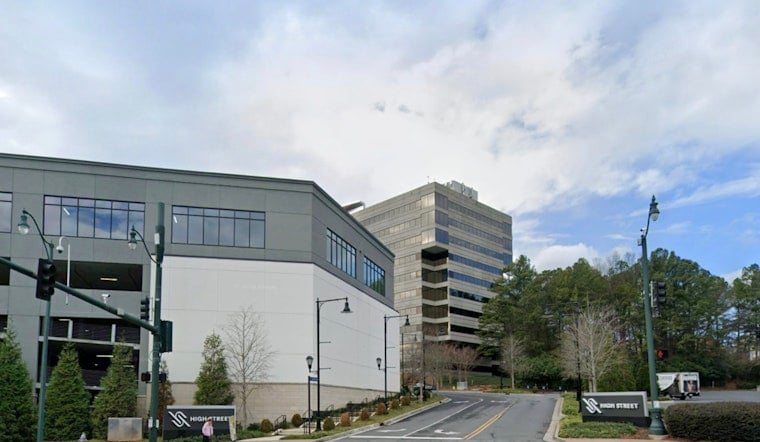
High Street, the $2 billion, 36-acre mixed-use gamble in Dunwoody’s Central Perimeter, has officially crossed its first big checkpoint. Developer GID Development Group has wrapped phase one and is already gearing up for what comes next, betting that a dense, walkable district can thrive in a corridor better known for traffic and office parks.
The initial opening drops hundreds of new apartments, a sizable office building and a slate of destination retail into the Perimeter mix. Strong early leasing, including a headline corporate commitment, is giving the project a tailwind even as the broader office market keeps sputtering.
As reported by the Atlanta Business Chronicle, GID completed phase one in 2025 and is now lining up its strategy for the remaining blocks in the master plan. The outlet noted GID landed a major office lease during what it described as lackluster leasing activity across the region, and sources told the Chronicle the developer is weighing product mix and timing for phase two. Company representatives have not released a public buildout schedule, instead saying later phases will track with leasing traction and overall market conditions.
In May 2025 GID announced that TriNet would lease roughly 150,000 square feet at High Street, a deal Business Wire described as Atlanta’s largest office transaction of 2025 and one expected to generate about 750 jobs. The same release put the price tag for phase one at roughly $415 million and said the inaugural phase delivered two luxury apartment buildings alongside the new office and retail space. For now, TriNet is the project’s marquee office win and a calling card for other tenants flirting with a move to the suburbs.
Phase one by the numbers
Phase one brings roughly 600 apartments split between two luxury residential buildings, about 320,000 square feet of office space that includes roughly 90,000 square feet of newly built loft office, and 150,000 square feet of retail organized around a central lawn and event plaza. Those figures are detailed on GID’s project page and the City of Dunwoody’s High Street overview.
What TriNet's deal says about the market
For market watchers, the TriNet lease is less about one company and more about what it signals. A major corporate tenant is still willing to sign a big check for a suburban, transit-adjacent project that promises restaurants, apartments and public spaces all within a short walk.
The Atlanta Business Chronicle cast the deal as a standout transaction in a period of tepid office leasing, while Bisnow called it the biggest Atlanta office lease of 2025. In a soft market, that kind of superlative is not trivial.
Next steps and timeline
GID’s full master plan contemplates about 672,000 square feet of Class A office space, roughly 400,000 square feet of curated retail, two hotels and approximately 3,000 residential units at full buildout. The developer has said the project will roll out in phases that track with leasing demand rather than on a rigid construction calendar.
GID’s materials put a heavy emphasis on public spaces and a pedestrian-oriented street grid as the backbone of future blocks, with the company signaling that real-time market feedback will dictate the exact order and pace of new deliveries.
Location and transit access
High Street sits at the intersection of Perimeter Center Parkway and Hammond Drive, steps from the Dunwoody MARTA station and with direct connections to GA-400 and I-285. The City of Dunwoody’s overview describes the project as a transit-oriented town center that plugs new housing and retail into existing office clusters, essentially stitching together a more urban-feeling hub in the middle of the Perimeter.
Local reaction and what to watch
Local officials were quick to celebrate the TriNet news. Dunwoody Mayor Lynn Deutsch said the company’s choice “highlights Dunwoody as a desirable location to both live and work,” and GID President John Gagnier labeled the lease a validation of the project’s vision, according to Business Wire. Behind the scenes, brokers and analysts say they are closely tracking additional office interest, early retail sales and apartment leasing velocity, since those numbers will heavily influence when GID moves shovels into the next blocks.
Developers and city leaders alike say the next chapters at High Street hinge on the project’s ability to keep landing sizable office tenants and maintaining healthy retail activity once the novelty wears off. If those pieces hold together, the Perimeter could gradually shed some of its drive-only reputation and edge closer to a dense, walkable center that looks a lot less like the auto-centric suburban campuses that have defined the area for decades.





