

























































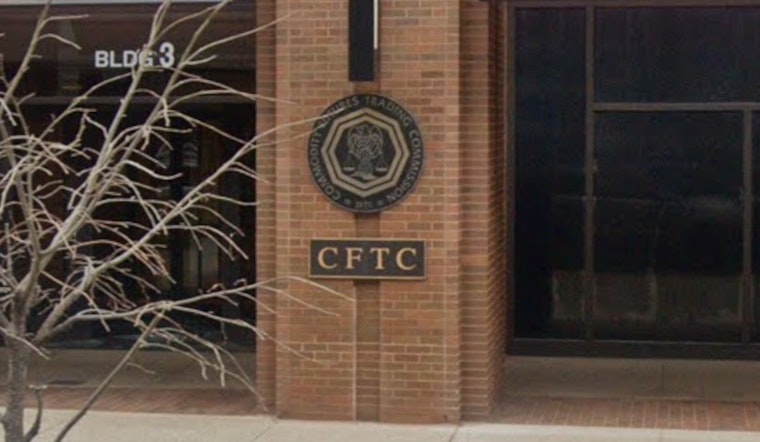
The U.S. government has hauled Illinois into federal court, suing the state on Thursday and asking a Chicago judge to stop local officials from policing prediction‑market platforms. At issue is whether Illinois can use its gambling laws to clamp down on exchanges that Washington treats as regulated derivatives markets, turning a simmering policy dispute into a full‑blown jurisdiction fight.
According to the federal complaint, Illinois officials tried to lean on state gaming rules to shut down platforms that list event contracts, even though those markets are overseen in Washington as swaps. The filing accuses state regulators of targeting exchanges that the federal government treats as derivatives venues and says those moves sparked a broader confrontation over who gets to police the fast‑growing prediction‑market space.
The suit, filed in U.S. District Court in Chicago, names officials at the Illinois Gaming Board along with state leaders, including Gov. J.B. Pritzker and Attorney General Kwame Raoul. It challenges cease‑and‑desist orders sent to operators such as Kalshi, Polymarket, and Crypto.com, arguing that those actions "intruded on the federal government's exclusive authority to regulate national swaps markets," according to Reuters.
The case follows a wave of state enforcement actions and overlapping lawsuits, arriving after the Commodity Futures Trading Commission stepped in repeatedly to defend its turf. The CFTC filed a friend‑of‑the‑court brief, and Chair Michael S. Selig warned in a public statement that the agency "will no longer sit idly by" while states attempt to regulate event contracts, per the CFTC.
Lawmakers and industry players have also jumped into the fray. Senators Adam Schiff and John Curtis introduced legislation this month aimed at curbing sports‑related contracts, and platforms have rolled out new insider‑trading bans and surveillance tools in response to the backlash. Those moves have coincided with a flurry of warnings and orders from regulators in multiple states targeting prediction‑market operators and trading apps now offering event contracts, as reported by the Associated Press.
Legal Stakes And Court Questions
At the center of the Chicago case is federal preemption, specifically whether Congress, through the Commodity Exchange Act, gave the CFTC sole authority over swaps traded on designated contract markets. Legal analysts say a win for the United States would lock in a uniform federal framework for event contracts. If the government loses, states could try to impose geofencing, their own licensing regimes, and steep local taxes that carve up national trading pools, a split that observers say has already been illustrated by divergent rulings in Nevada and Massachusetts. Norton Rose Fulbright details the commission's preemption arguments along with potential consequences for exchanges.
What This Means For Illinois
If federal courts ultimately back the United States' position, Illinois regulators would likely be blocked from enforcing their cease‑and‑desist orders against CFTC‑regulated platforms and from layering on separate state licensing or tax systems. Should the state prevail, by contrast, platforms could be pushed to wall off Illinois users, obtain state licenses or pay Illinois taxes, an outcome industry lawyers say would drain liquidity and complicate banking and consumer protections, according to the Associated Press.
The complaint asks the court for declaratory relief and injunctions that would prevent Illinois from policing designated contract markets at all. It tracks similar federal challenges filed in other states as platforms and regulators race to secure clear judicial answers on who is in charge. Requests for comment from the Illinois Gaming Board and the named state officials were not immediately returned, Reuters reported.





