

























































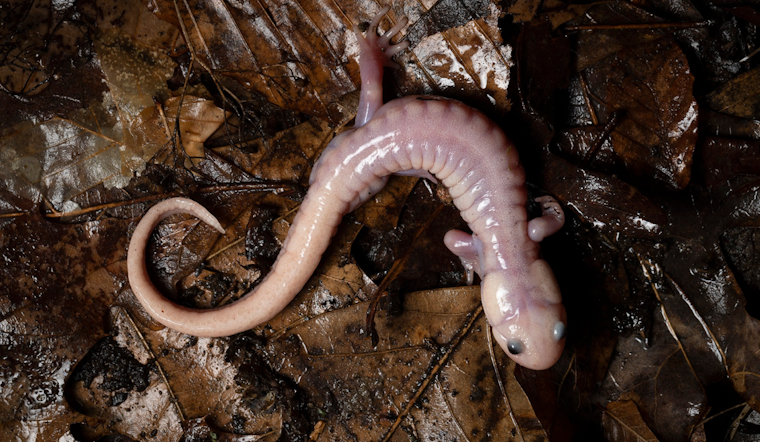
A ghost-pale spotted salamander stopped a group of Fairfield County herpetologists in their tracks this spring, after they came across the nearly white amphibian during a field outing and snapped several photos. The animal’s faint, washed-out spots made it stand out from the usual dark-bodied, yellow-spotted salamanders Ohio nature fans are used to seeing. Those photos have since made the rounds among Ohio naturalists and stirred fresh interest in the state’s wildlife community.
According to FOX 8, the images were taken in March by photographer Leah Conway. The station reports that the Ohio Division of Wildlife shared the photos on social media, and herpetologists who reviewed the shots identified the animal as leucistic rather than albino.
What Is Leucism?
Merriam-Webster defines leucism as a genetic condition that leads to a partial loss of pigmentation, giving animals a pale or washed-out appearance while often leaving their eye color unchanged. Field guides note that the spotted salamander (Ambystoma maculatum) is found throughout Ohio in deciduous woodlands near ponds, swamps and vernal pools, and it is most likely to be spotted on wet spring nights, according to the Ohio Division of Wildlife.
Small Animal, Big Defense
Despite their modest size, spotted salamanders come equipped with a serious chemical defense. Granular skin glands along the back and tail can release a sticky, milky secretion when the animal feels threatened, and that substance acts as a deterrent to predators, according to the Animal Diversity Web. That defensive slime, combined with the animals’ delicate skin, is a good reason for the public to avoid handling wild salamanders unless they are trained and properly equipped, since the secretions can be irritating and oils or chemicals can harm the salamanders on human hands.
How Locals Should Respond
Wildlife officials say that spotting unusual color variants is a treat for any nature lover, but it is not a reason to pick up or disturb the animal. The advice is simple: enjoy the moment, take photos from a respectful distance, and, if there is a question about what you are seeing, share images with state or local wildlife groups for help with identification. The photos credited to Leah Conway have already fueled plenty of discussion among area naturalists and were featured by FOX 8, which passed along the Division of Wildlife’s social media post.
For now, the pale salamander stands as a rare and quietly striking reminder that Ohio’s familiar woodlands still have surprises tucked under their logs, especially on those soggy early-spring nights when secretive amphibians emerge. Residents who encounter unusual or injured wildlife can look to the Ohio Division of Wildlife for guidance on how to report sightings and get advice on next steps.





