

























































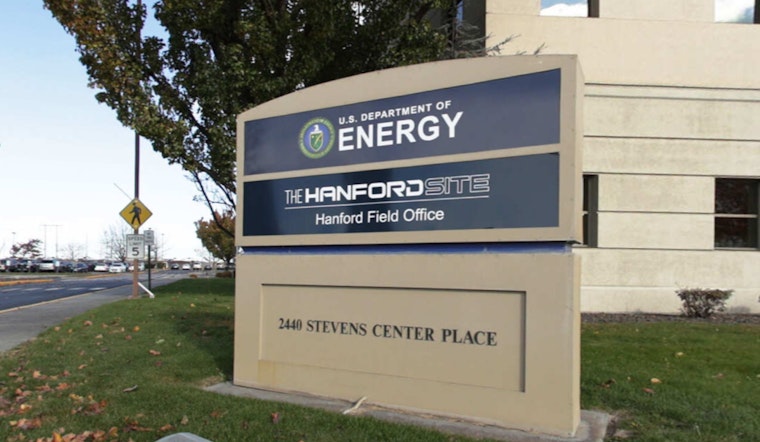
Work across Hanford's tank farms largely ground to a halt Thursday as crews hit pause in the wake of a colleague's death and pressed managers for clearer emergency location information. The employee was identified as Bryan Foster, who collapsed on March 26 while in a supply vehicle at the tank farms. Workers said the pause reflected fears that the site's emergency dispatch tools might not reliably pinpoint specific tank areas on the sprawling reservation.
As reported by The Seattle Times, the Hanford Atomic Metal Trades Council issued a stop-work order mid-morning, and crews held their position until managers and emergency contractors agreed to change how the Hanford Fire Department's dispatch mapping is set up. The dispute centered on the dispatch computer system, which in some cases relies on building names rather than the specific tank-farm areas where crews actually operate. Officials lifted the halt late in the afternoon after agreeing to add buildings associated with certain tank farms to the system.
Phil Breidenbach, chief operating officer of Hanford Tank Waste Operations and Closure, told staff that "despite the best efforts of his co-workers and first responders, he passed away," and that counseling and grief support were made available to Foster's colleagues, the Tri-City Herald reported. The Herald's coverage said the death does not appear to be work-related so far and that Benton County Coroner Bill Leach is overseeing an autopsy. Foster was identified in local reporting as a nuclear chemical operator who had worked on site for about five years.
The site emergency contractor, Hanford Mission Integration Solutions, told managers that emergency response times when Foster collapsed were "well within standards," The Seattle Times reports. Union leaders said the mapping gap, rather than the speed of the response, was the central worry because precise location data matters across a 580-square-mile campus.
Why the Mapping Gap Matters
The Hanford Site stores roughly 56 million gallons of radioactive and chemically hazardous waste in 177 underground tanks on a 580-square-mile reservation, a legacy of plutonium production during World War II and the Cold War. The U.S. Environmental Protection Agency notes the scale and legal framework for tank-waste cleanup, which helps explain why rapid, accurate emergency-location information is critical for worker and public safety.
A Site Under a Microscope
Hanford has been ramping up tank-transfer and treatment work since last year as the Waste Treatment and Immobilization Plant began feeding low-activity waste into its melters, a milestone that increased on-site activity and scrutiny. Contractors and federal agencies say the vitrification work is crucial to long-term cleanup but also raises the stakes for coordinated emergency response among the many contractors and roughly 13,000 workers at the site; see recent updates from the Hanford Vit Plant for background on that work.
Worker Safety, Stop-Work Power
Hanford workers have the contractual right to stop work if they believe conditions pose a danger to health or the public, a procedure spelled out by the U.S. Department of Energy. Unions and crews have used that tool previously during concerns about vapors and other hazards, and local reporting has documented past stoppages tied to suspected vapor exposures. KIRO7 covered earlier incidents where worker safety worries prompted immediate pauses.
A fundraiser has been started to help Foster's wife and their 4-year-old daughter, and company officials said grief counseling was offered to co-workers, local reporting shows. Authorities have not released a final cause of death pending autopsy results, and Hanford contractors said they will continue reviewing whether additional procedural or technology fixes are needed to keep the sprawling cleanup effort safe.



